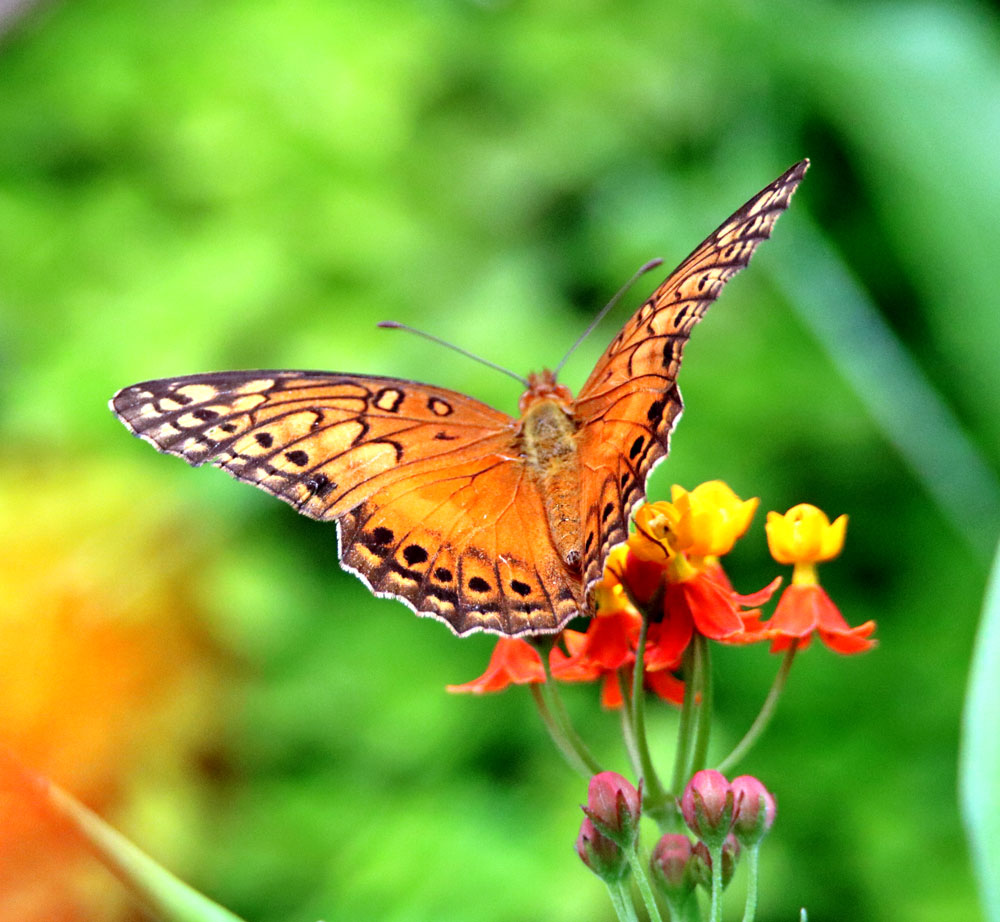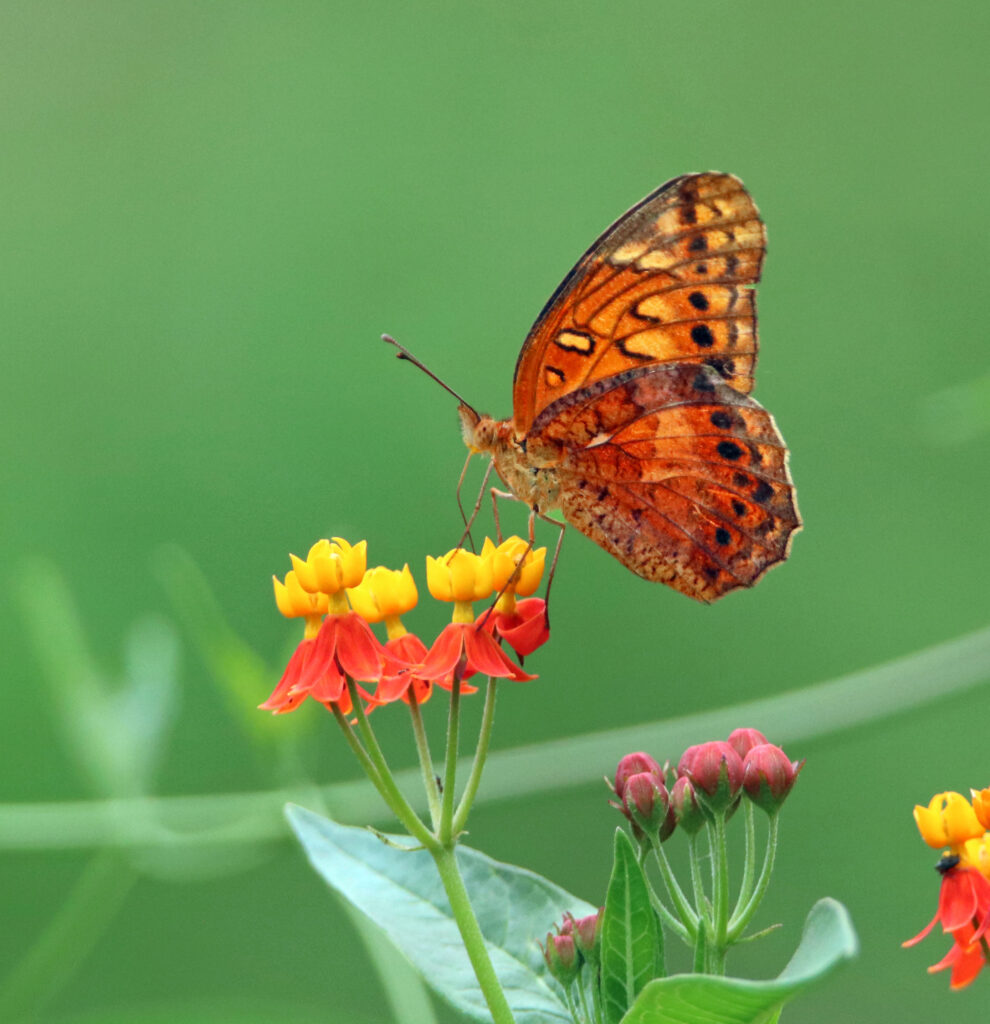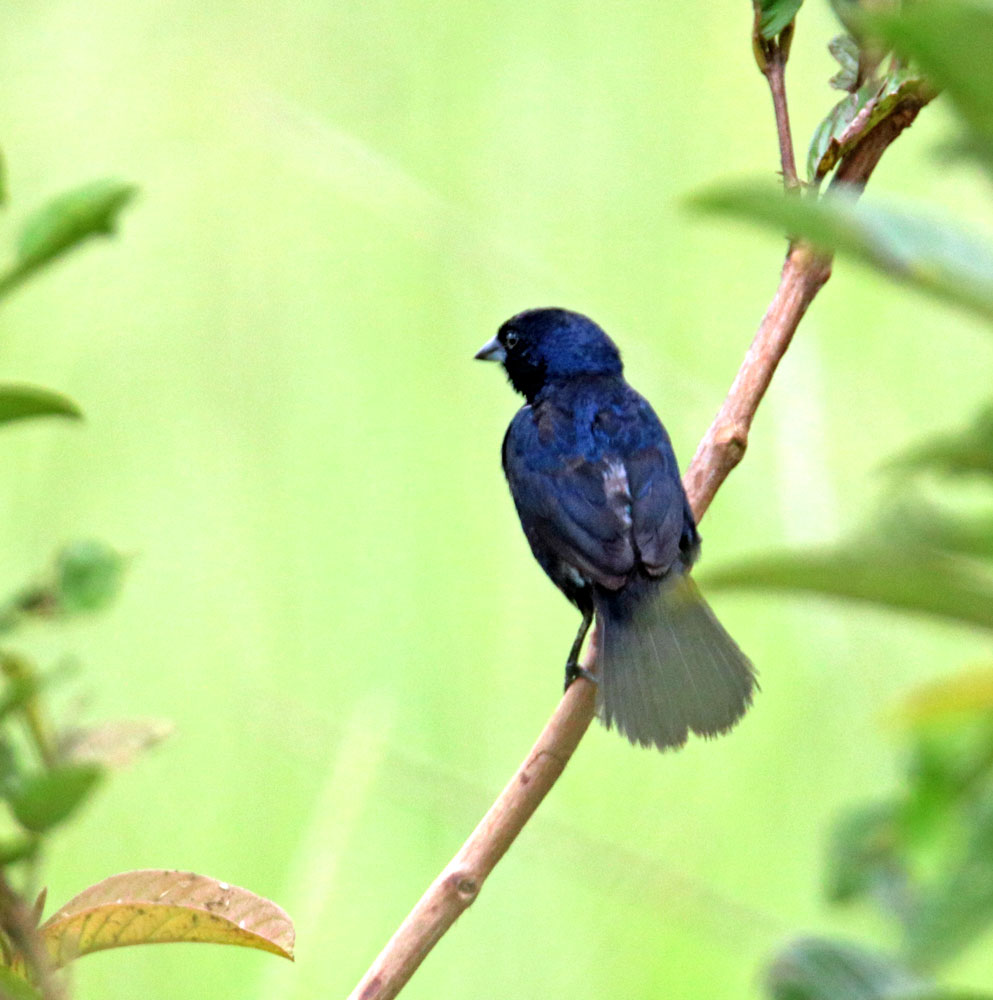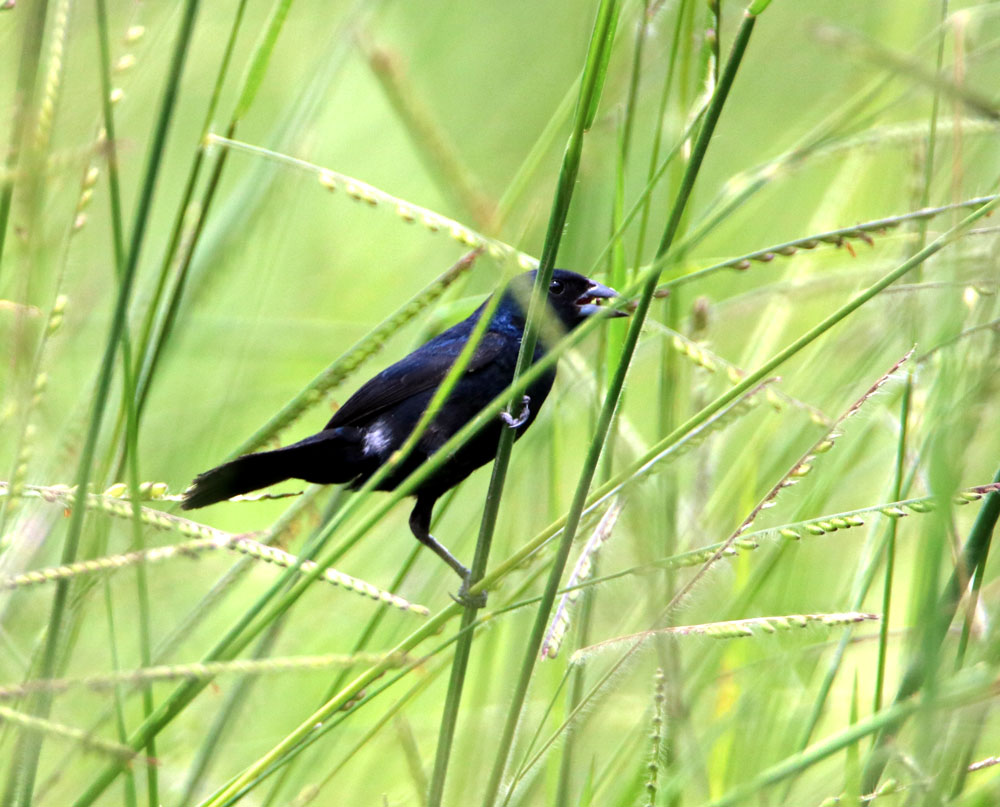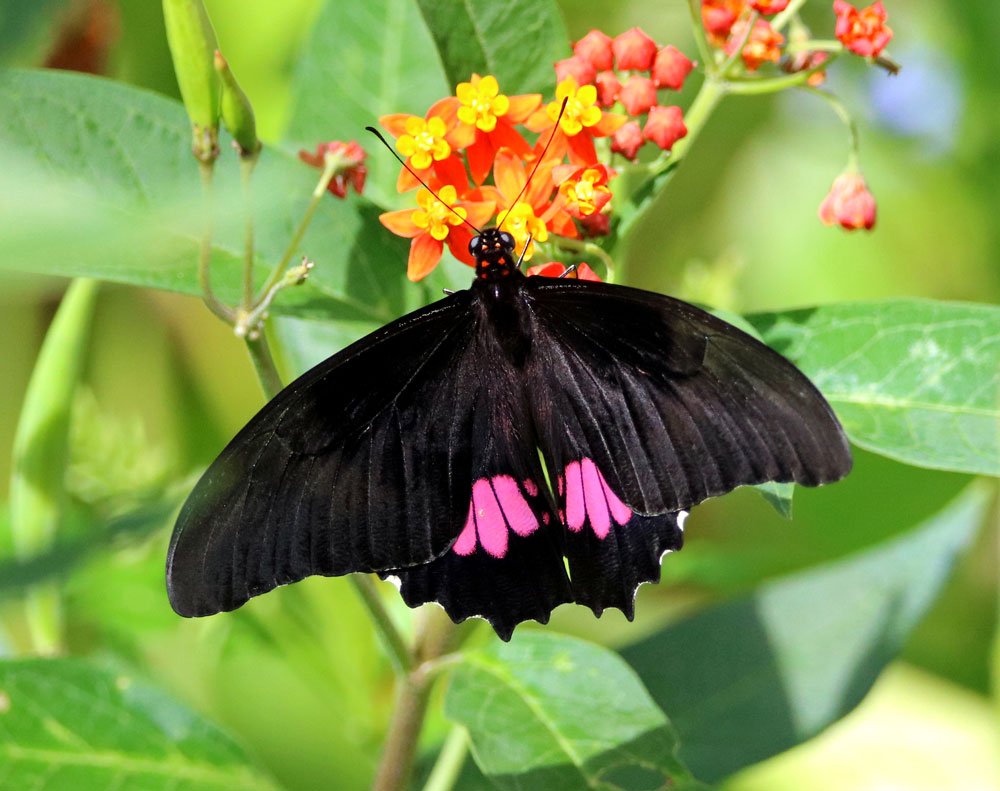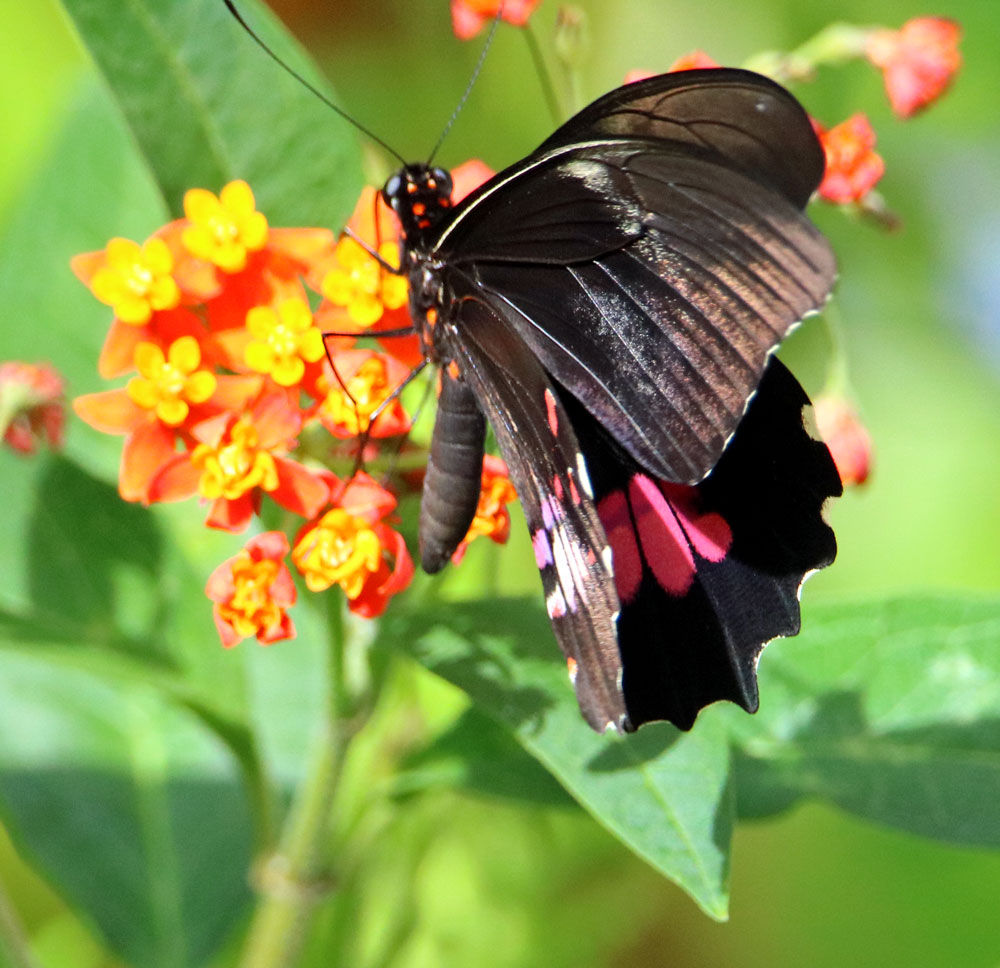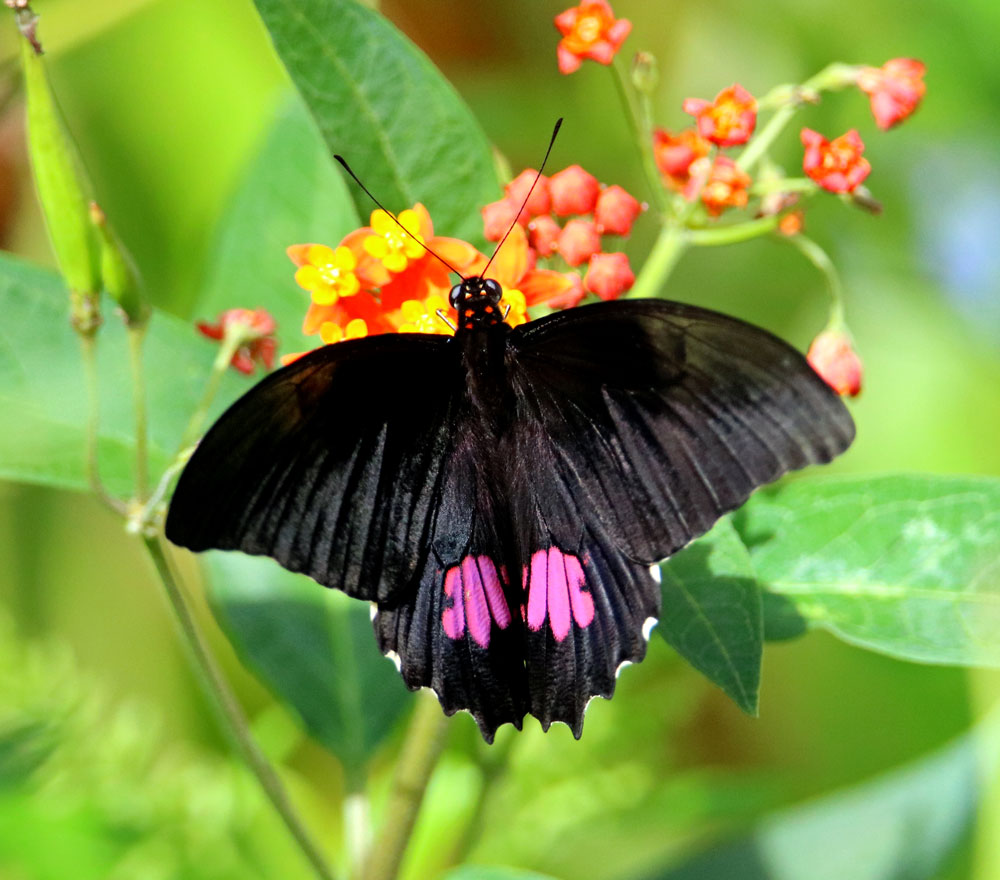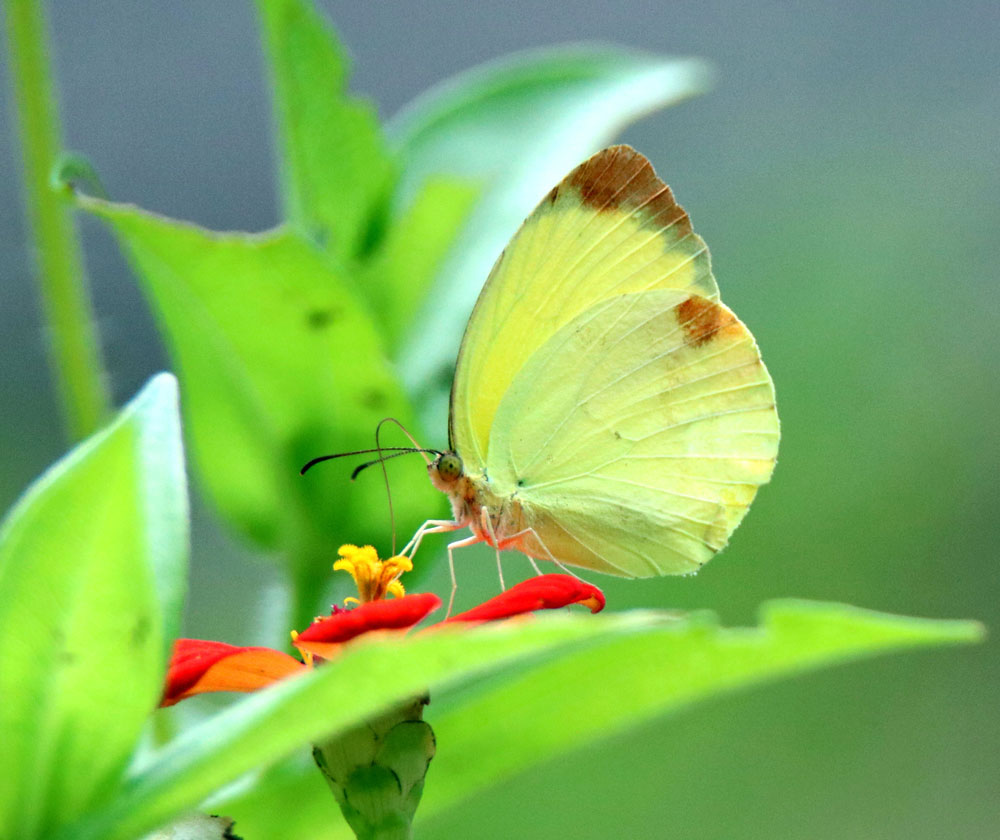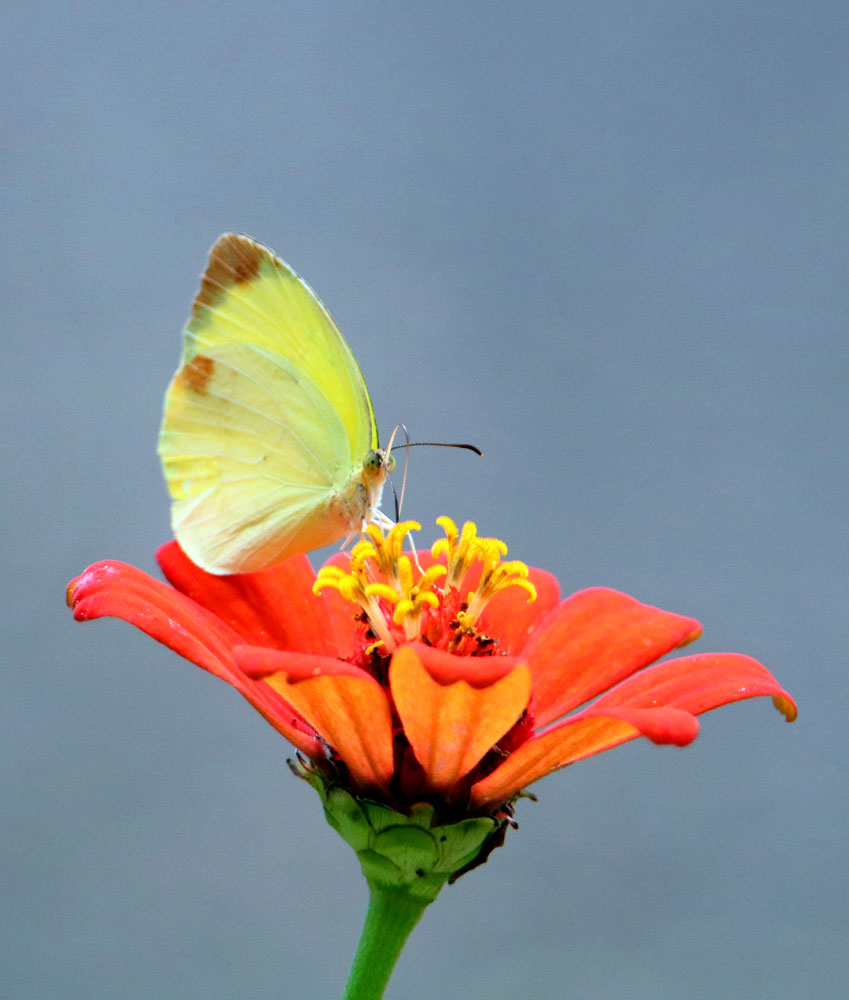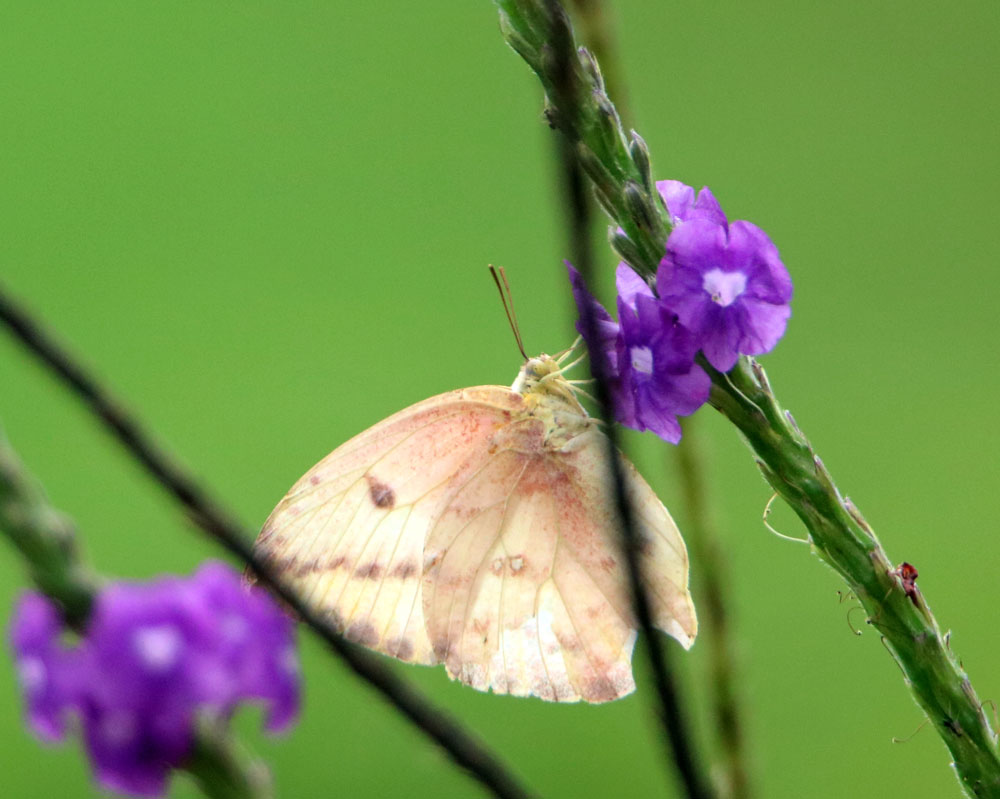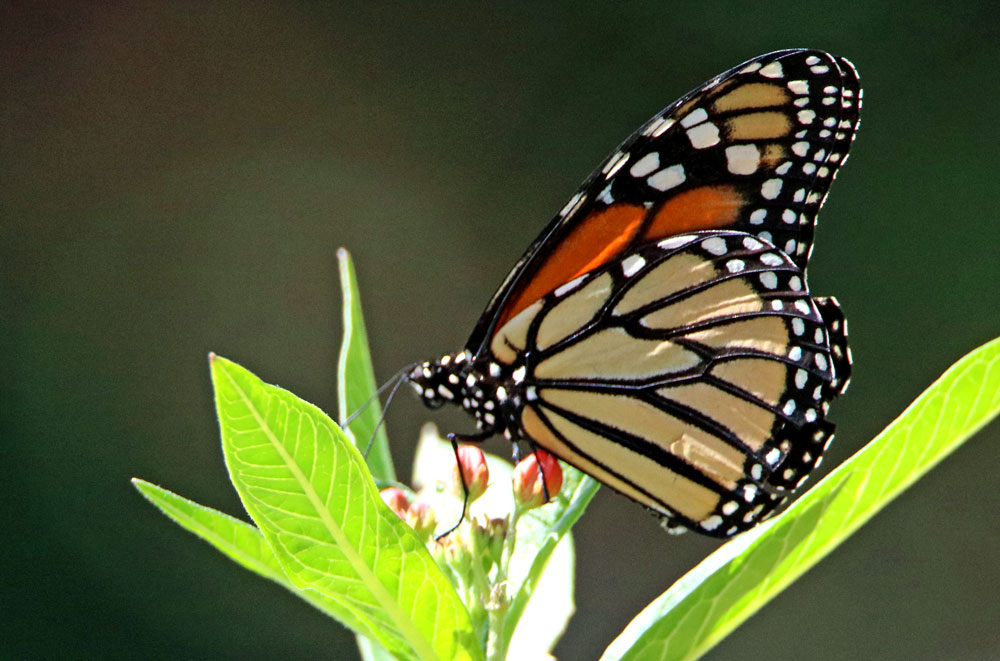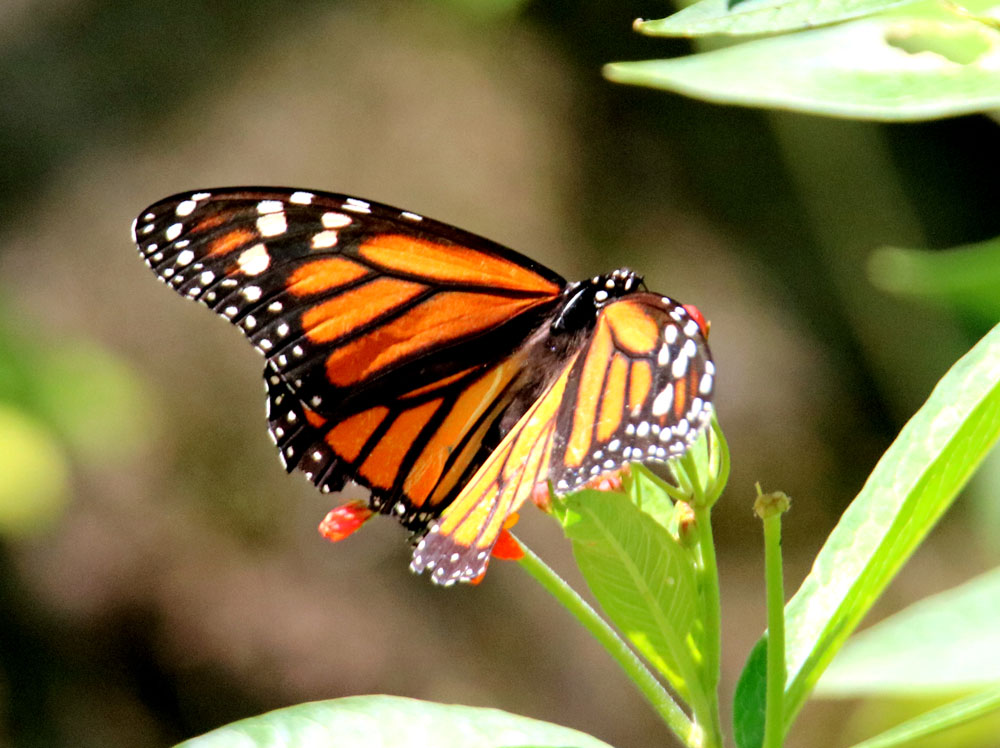

One of the late hangers-on in the late butterfly season is this Polydamas Swallowtail (my gallery link) and I’m sorry I let the camera focus on the flower more than the butterfly! 🙂

Both my gardens and ones I visit
One of the late hangers-on in the late butterfly season is this Polydamas Swallowtail (my gallery link) and I’m sorry I let the camera focus on the flower more than the butterfly! 🙂

In November this attractive leaf just popped up in my garden as what I figured was a “weed,” and thus I pulled it up, after photographing with my cell phone, and threw it away. Then I ran this leaf photo through iNaturalist and discovered that it is (was) a Marigold Pepper, Piper marginatum (iNaturallist link). Just another one of the many nature surprises I keep finding in my garden and all over Costa Rica! 🙂 What I read about this is that there are no “peppers” or fruit, but rather people use the leaves for seasoning and extracting a flavorful oil. Hmmmm, maybe I should have kept this “weed!” 🙂

See more such beauties in my Leaves & Nature Things GALLERY.
¡Pura Vida!
Is back in Costa Rica from “up north” and no longer called just “Yellow Warbler” as in the past but has a new official name of Northern Yellow Warbler – Setophaga aestiva (linked to my gallery) and what is used by eBird and iNaturalist. Some older books still say just Yellow Warbler and the Princeton Field Guide says American Yellow Warbler. I’m not sure which names are harder to keep up with, Birds or Butterflies! 🙂 They seem to both be changing frequently. This particular bird showed up on December 1 in my Cecropia Tree. Here’s two shots of him/her . . .

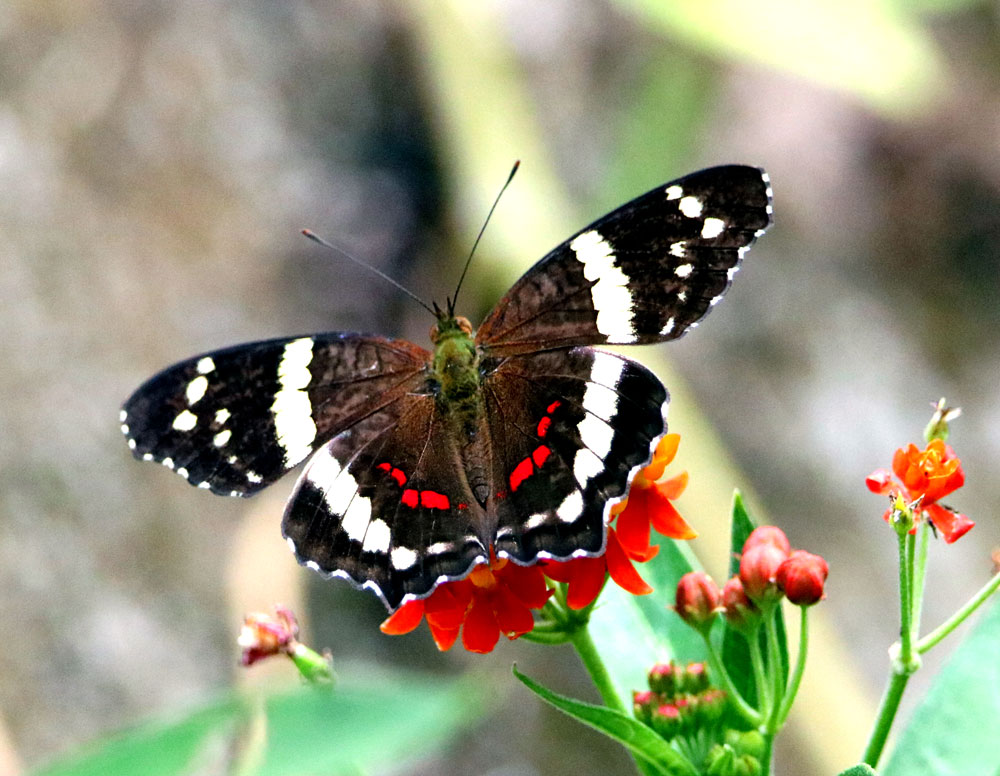
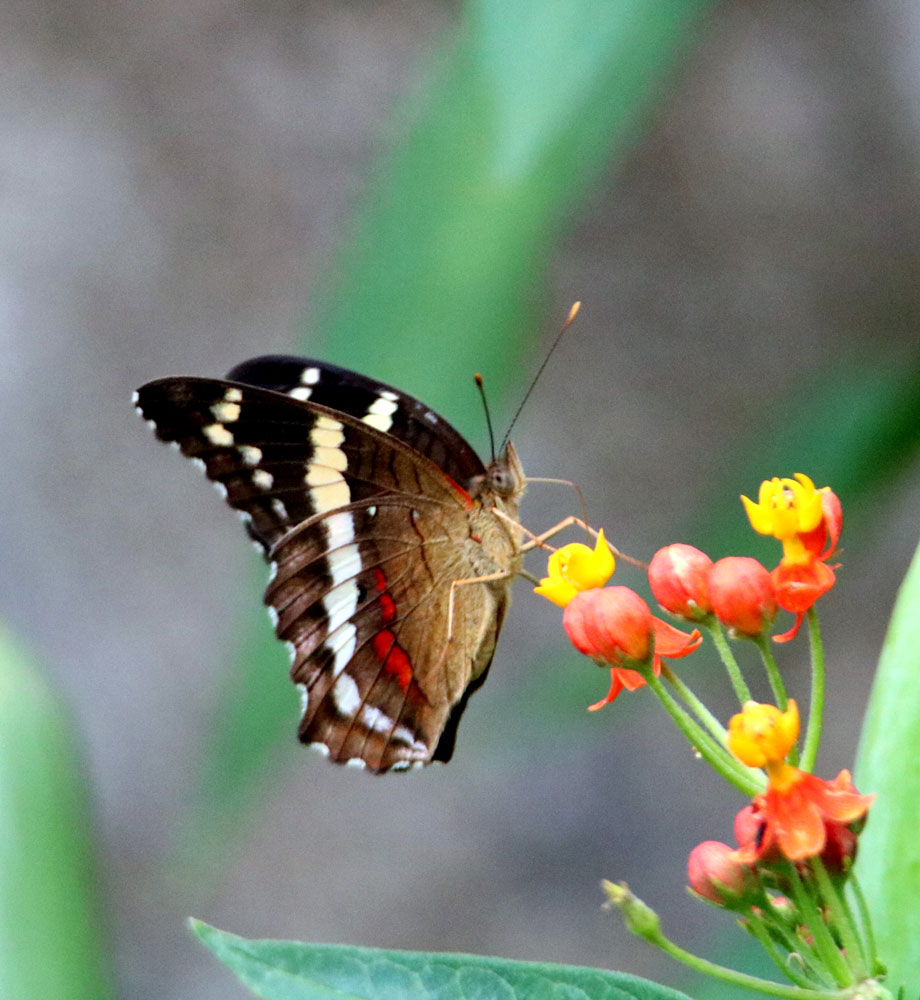
This very common butterfly is the one I keep seeing as many of the others are no longer around. There are much better photos in my gallery: Banded Peacock, Anartia fatima.

¡Pura Vida!
This is my first sighting of a Red Cracker, Hamadryas amphinome (linked to iNaturalist). I did post one here earlier that I called a Red Cracker, but later found out that it was actually an Orange Cracker. Still learning! 🙂

One of the most common or often seen butterflies in my garden is the Banded Peacock, Anartia fatima (my gallery link) and maybe also the most common in other places I visit in Costa Rica.

¡Pura Vida!
I’m glad this favored bird visits my garden often enough for me to see at least once a month now! See more photos from multiple locations in my gallery: Lesson’s Motmot, Momotus lessonii. Purely a Central American bird, found only from Panama to Southern Mexico.

The big yellow patch is what indicates that it is a male, while the female has only the brown spot on each wing. The feature photo is one typical view with a greenish/yellowish hew on the folded wings while the top of wings are usually a bright white like the photo below where the same butterfly is strangely contorted. See more of my photos of this interesting butterfly in my gallery: White Angled-Sulphur, Anteos clorinde. They are found as residents from Argentina to Mexico with migrants going into the Southwestern U.S. and Great Plains.

He’s becoming a favorite among the flowers and not sure he comes to the feeders that are dominated by the Rufous-tailed. See more photos from this week in the GALLERY: Blue-vented Hummingbird.

¡Pura Vida!
This is one that I have constantly confused with the Thoas Swallowtail with very little, tiny differences. But I think I have this one identified correctly this time. 🙂 From my garden and of course there is a GALLERY: Western Giant Swallowtail.