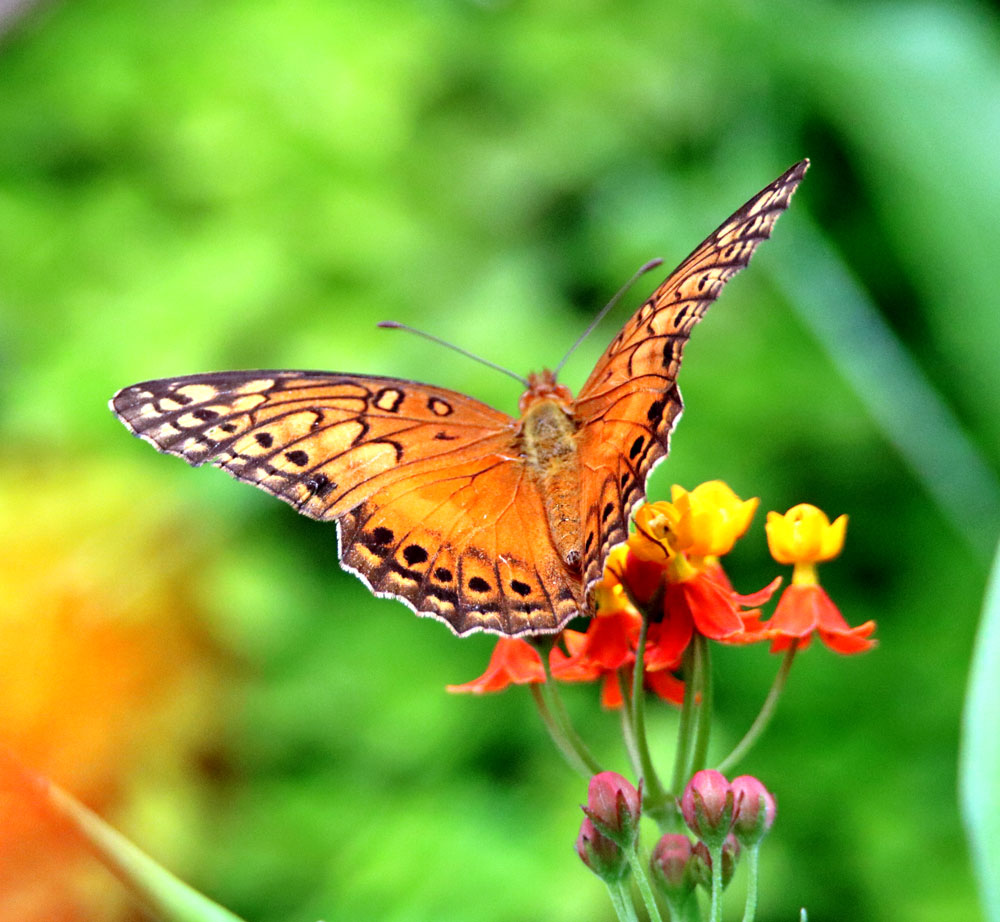
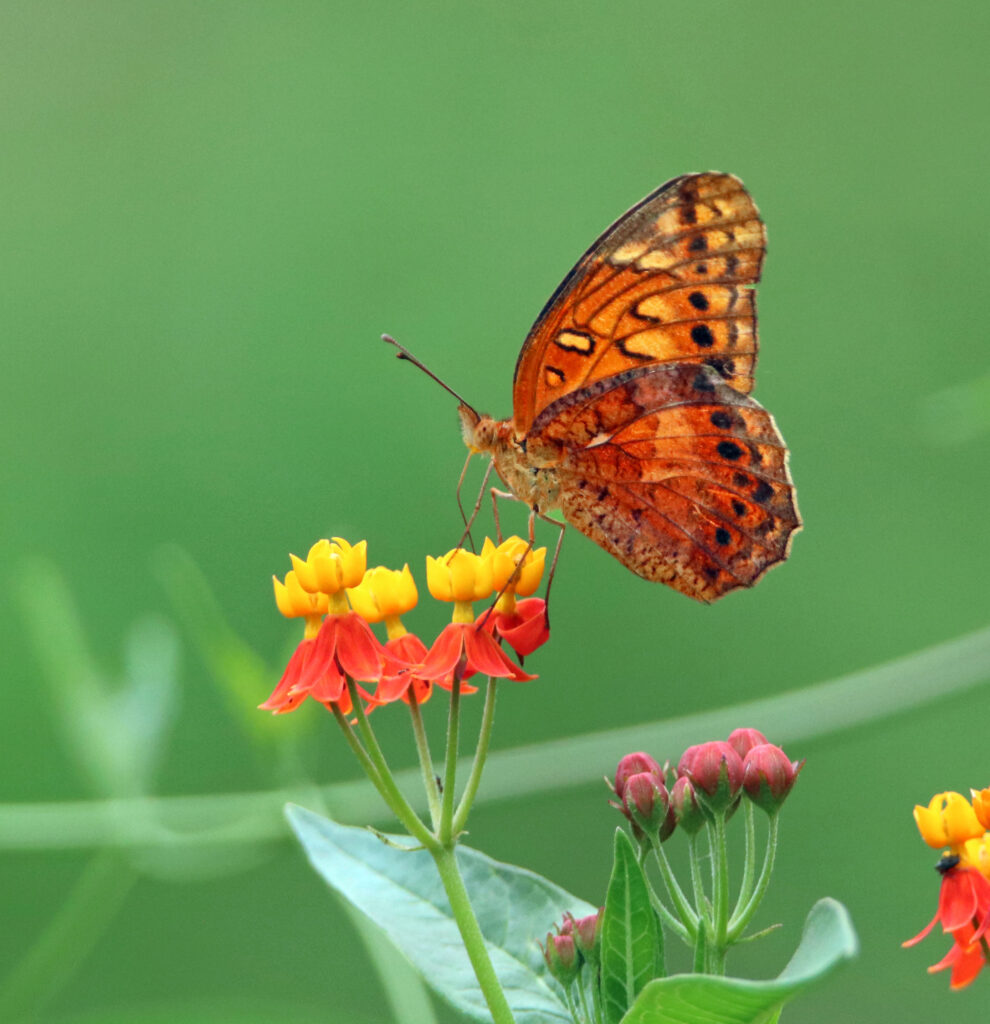
This colorful orange butterfly lives throughout Mexico and Central America, the West Indies and a few strays along the Southwestern U.S. border. See more photos in my gallery: Mexican Fritillary (linked). A bit of interesting indigenous history that includes this butterfly from Google Search:
The “Flower World” (Xochitl): In early Classic Teotihuacan and Postclassic Aztec culture, orange butterflies symbolized fire, rebirth, and a floral spiritual paradise. [1, 2] ~Google (Click the two footnote numbers for more information from their sources.)
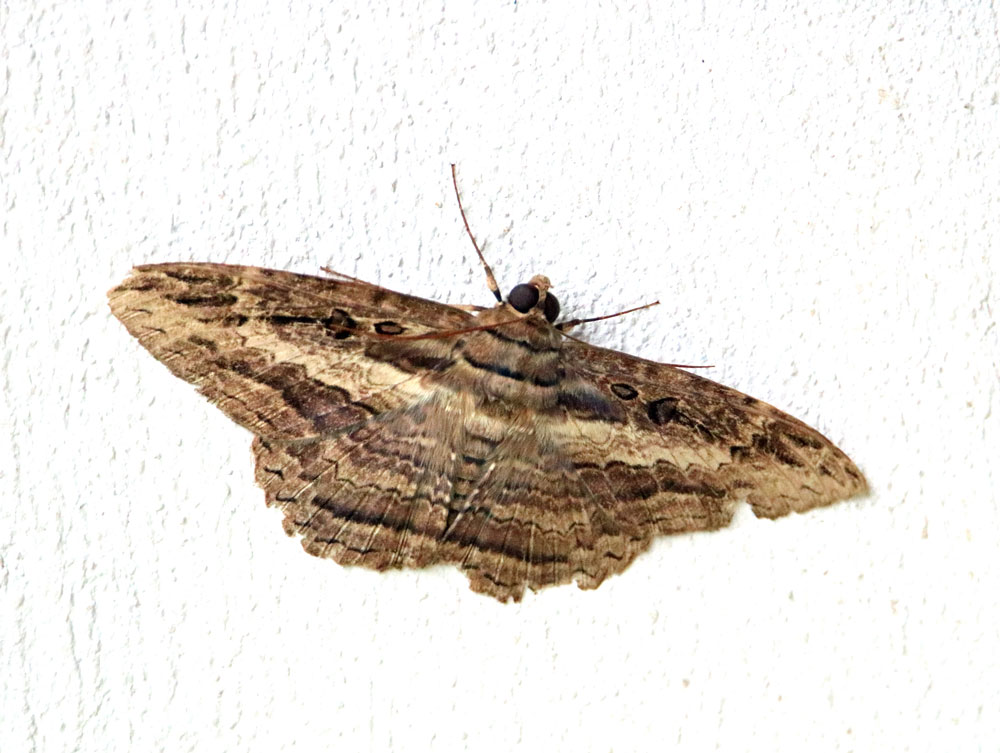
A new one this week, in the family of Erebid Moths (my gallery link), similar to the Black Witch Moth I see a lot of here. The Feigeria buteo (my gallery link). It’s always nice to find a new species for my collections! 🙂
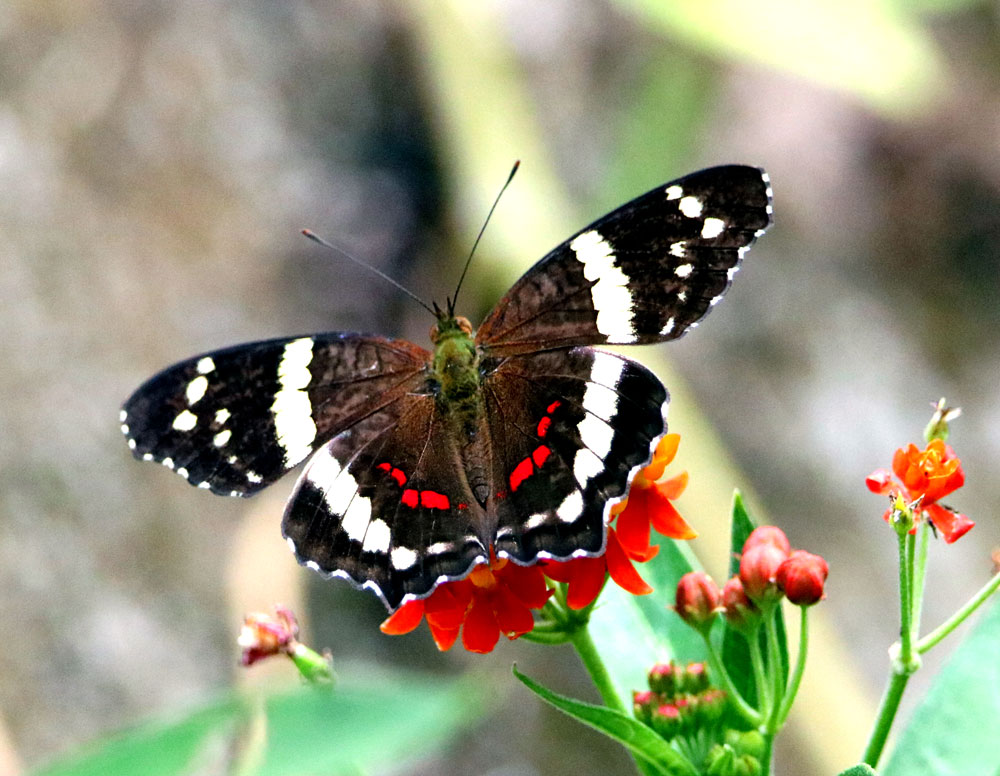
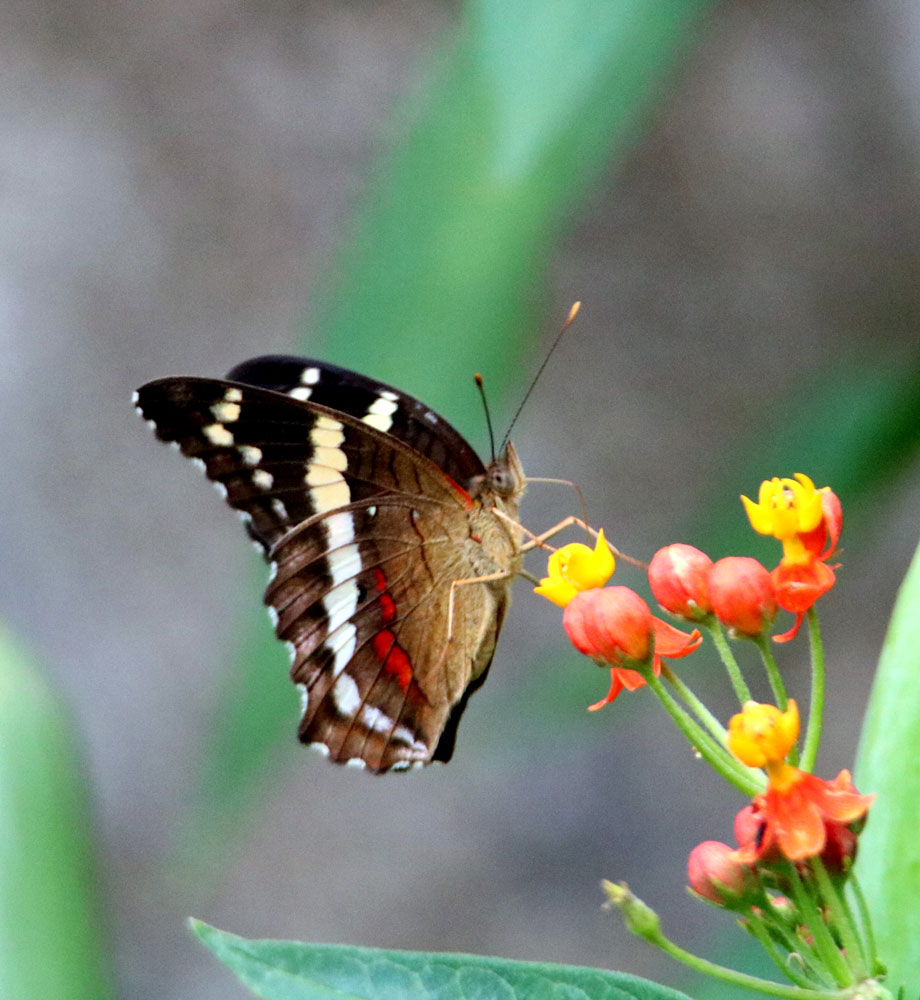
Still one of my most-seen butterflies that also continues to appeal to me, the Banded Peacock Butterfly (my gallery link), found all over Costa Rica as well as the rest of Central America, Mexico and the southern edges of Texas.
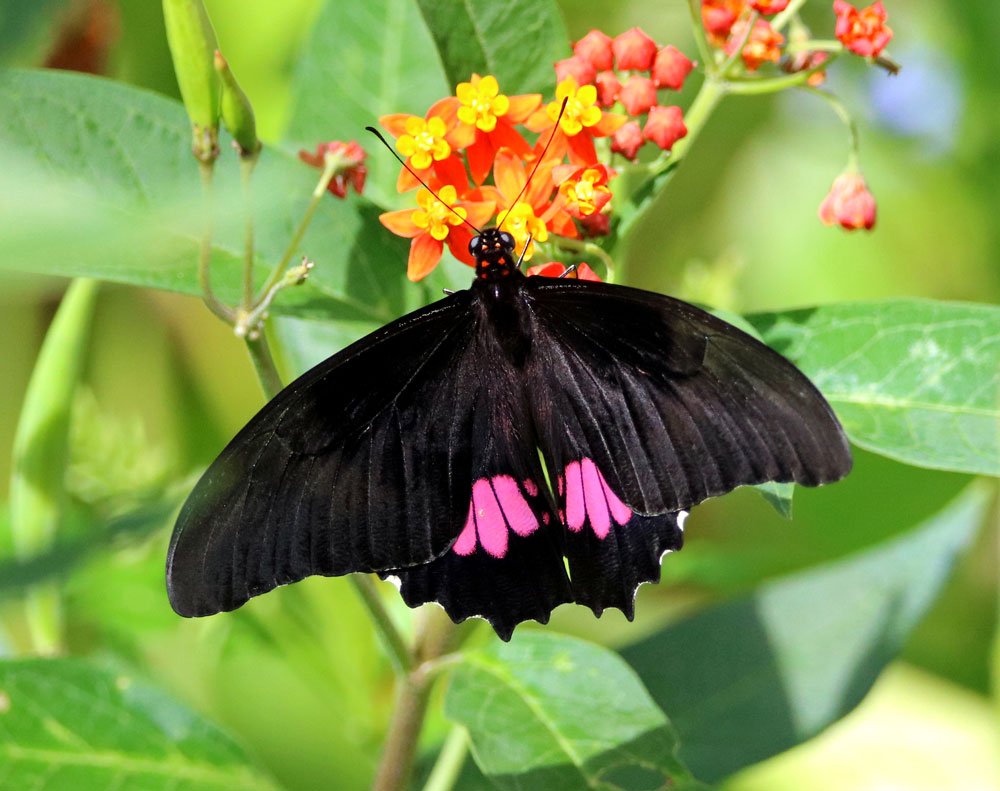
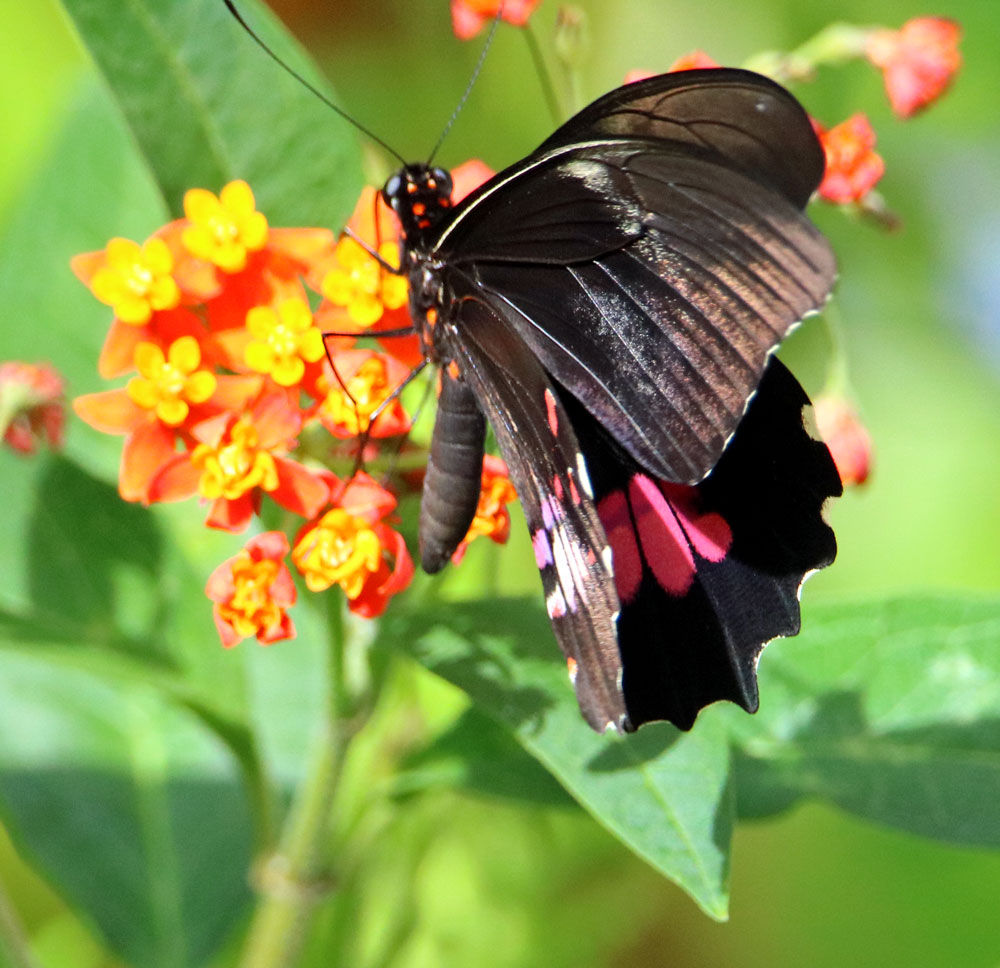
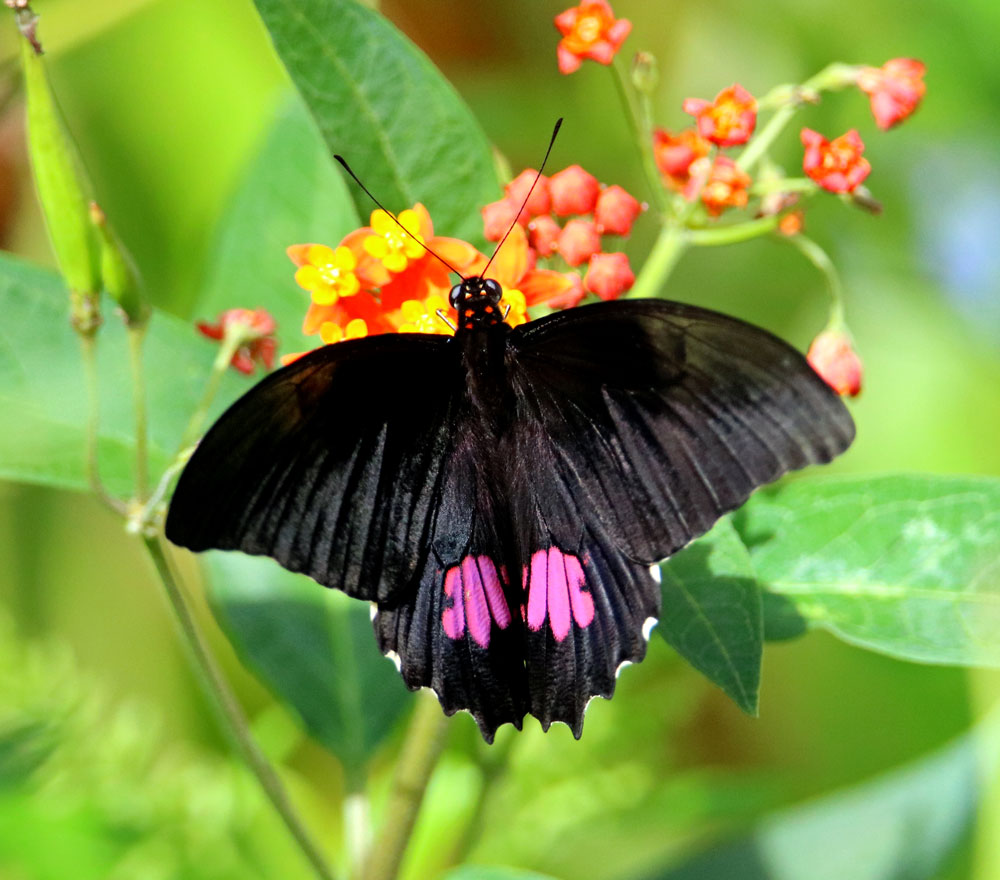
The Ruby-spotted Swallowtail (my gallery link) is found from Southern Texas south to Argentina and yes, it reminds me of several Cattlehearts, especially the Pink-spotted, but this is in a different subfamily from Cattlehearts. This is my second observation to not have white spots on the top of the forward wings, which is normal even if in a minority as you can see in my gallery or other online butterfly sites. But, you will see from the only partial side view this one ever gave me that he does have white spots on the underneath side of all wings. 🙂 Another exception in nature and I think that the all black top makes for a handsome butterfly!
A semi-side view shows white spots on the underneath side of both forward and hind wings.Ruby-spotted Swallowtail, Atenas, Alajuela, Costa Rica
¡Pura Vida!
Milkweed Flowers
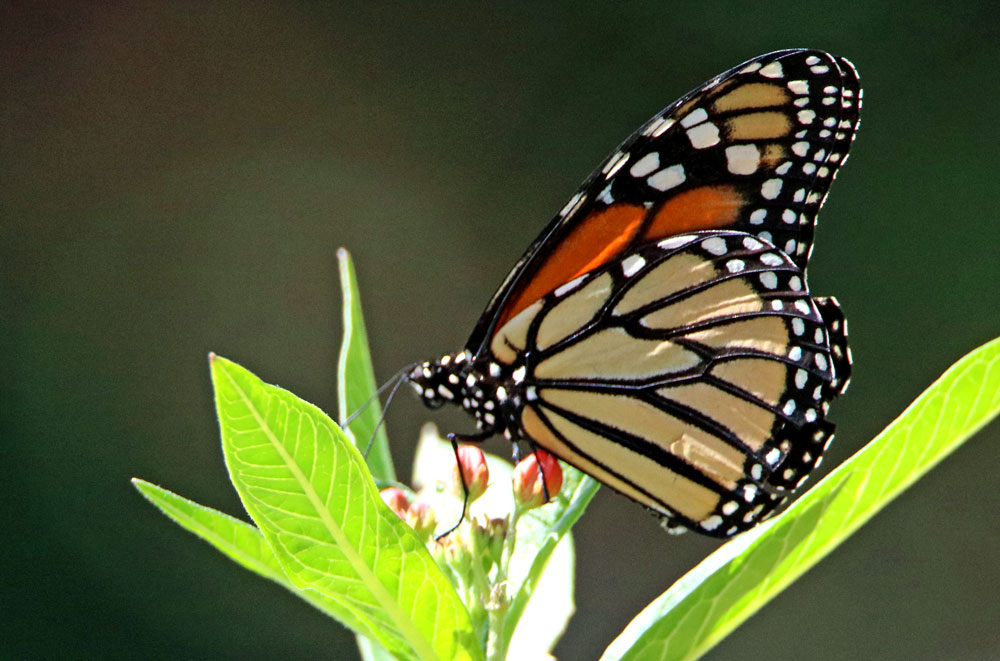
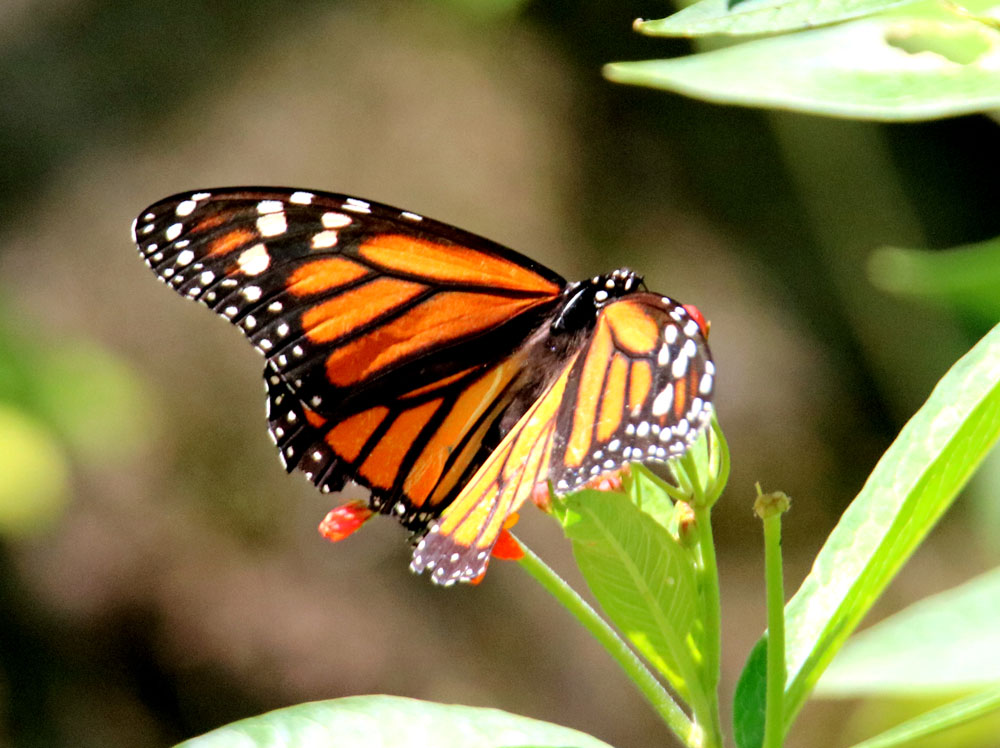
Have you noticed how many of my butterfly shots are on the Milkweeds now? 🙂 It is second only to Porterweed attracting the larger butterflies like this and the only flower Monarchs will come to. Tiny butterflies prefer tiny flowers. 🙂 I can’t believe that this is my first year to plant Milkweed! A great butterfly attractor! I recommend it!
Thank You! — For Reading My Blog!
JetPack just informed me that during August 2026 my blog & website had Nine Thousand Views! 9,000! I don’t know who all of you are, but thank you for reading and enjoying Costa Rica’s nature with me! ~Charlie
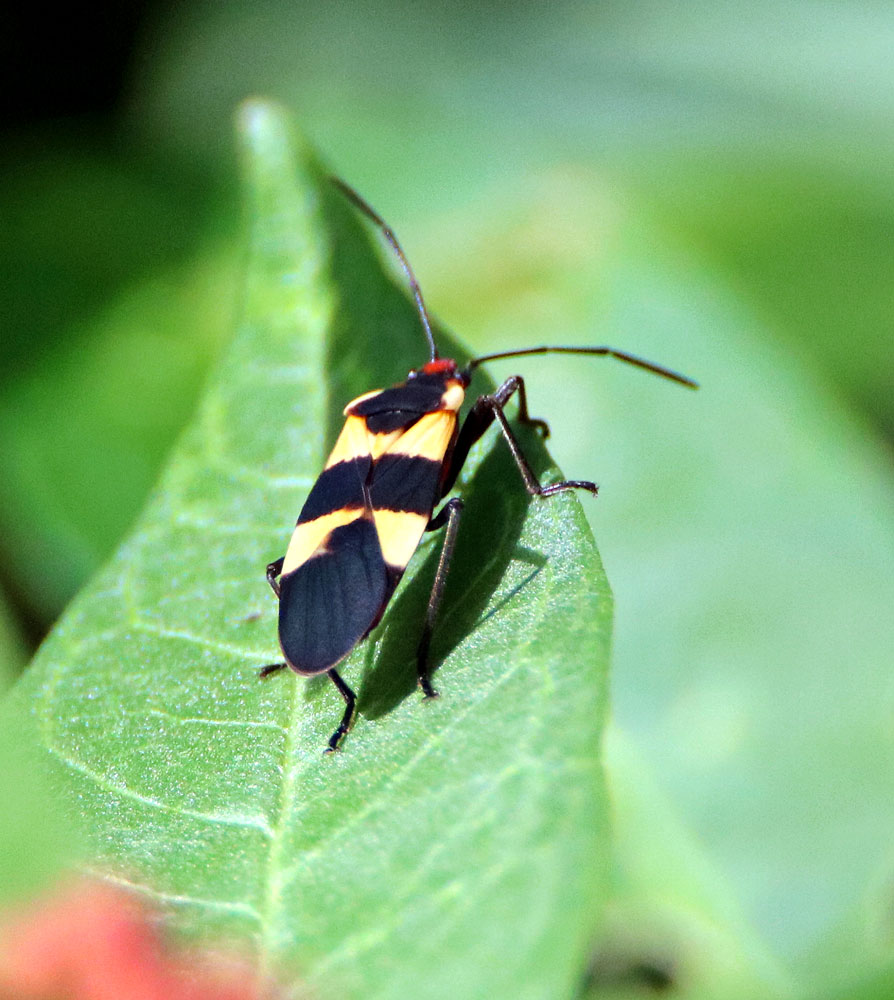
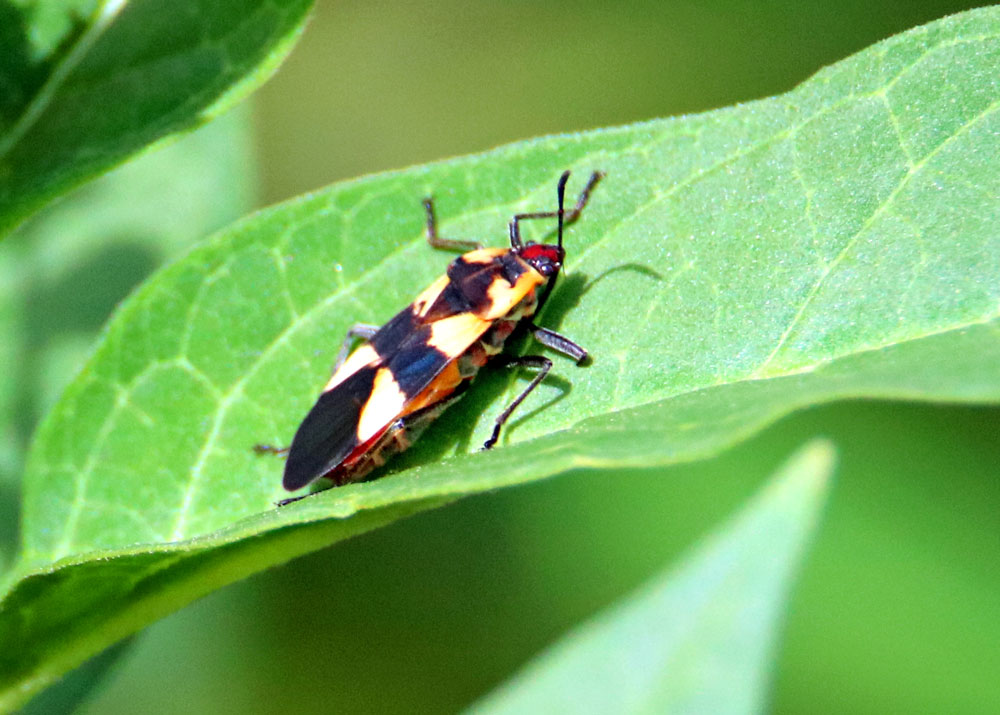
In addition to caterpillars, I’ve now had two Caribbean Milkweed Bugs(my gallery link) on my Milkweed flowers. There are several versions of this insect including a different subspecies in North America (Oncopeltus fasciatus) while the one here is Oncopeltus cingulifer. They do not harm the plant nor the caterpillars or butterflies if around. 🙂
GoogleAI says: “They use straw-like mouthparts to feed primarily on milkweed seeds and sap. By consuming milkweed, they store cardiac glycosides in their bodies, making them poisonous or unpalatable to predators like birds. They are mostly harmless to the plant and do not attack monarch butterfly eggs or caterpillars, meaning chemical control is rarely needed.”
One of my plants is seeding profusely, so maybe they were after the tiny seeds! 🙂
The smaller of the two on one of my Milkweeds. The Feature Photo is the larger one. This one may be a juvenile or in some species the female is smaller. I don’t know.
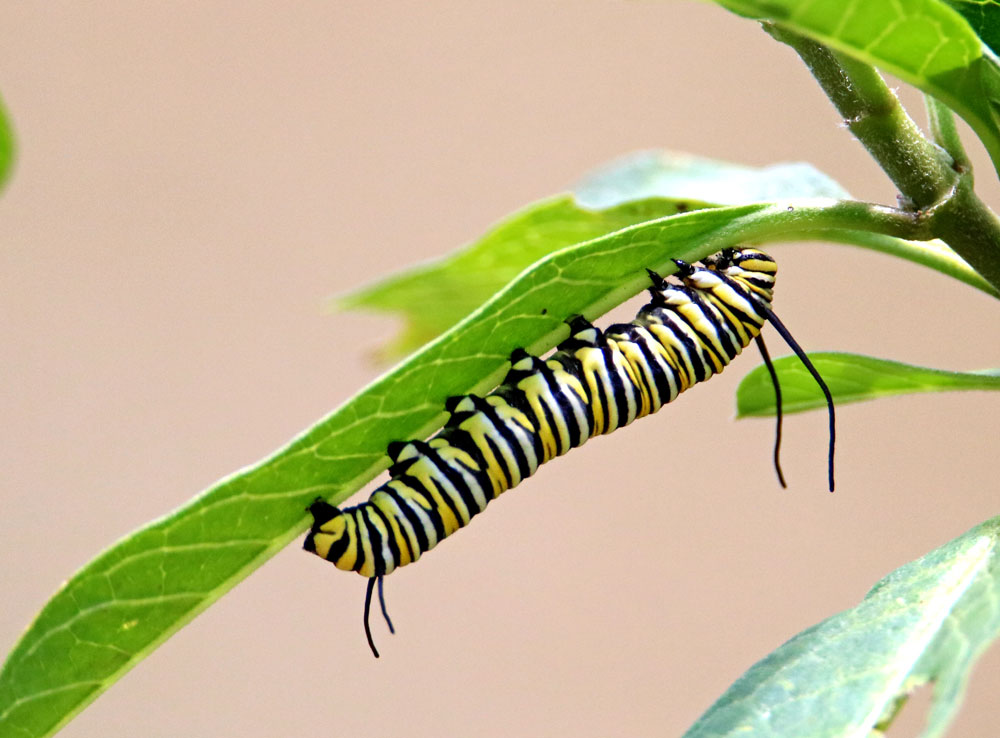
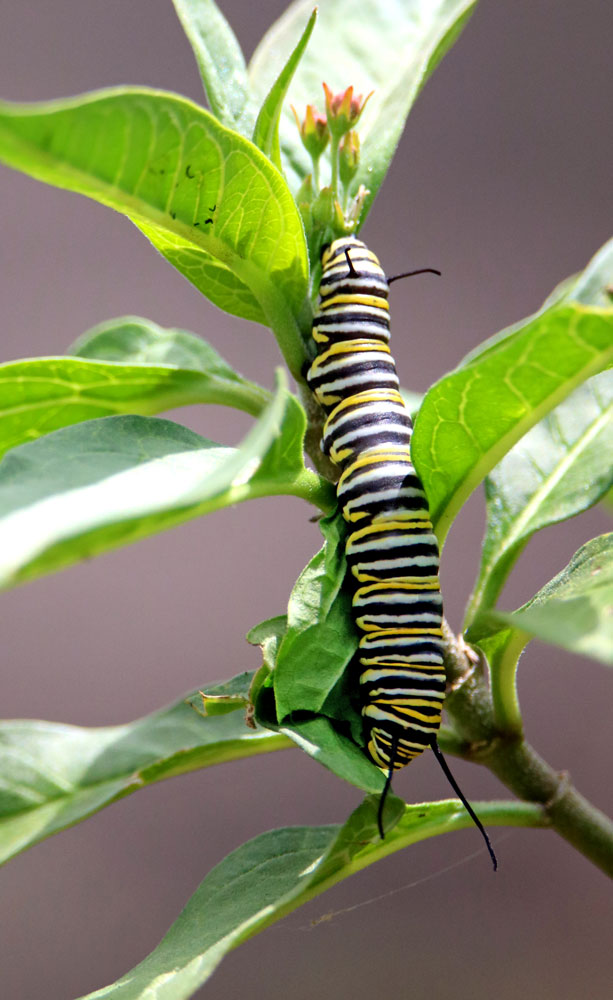
Now I have Monarch Caterpillars on one group of Milkweeds and I expect them to eat most of the leaves like the Queen Caterpillars did a month ago and that milkweed grew right back. So whoopee! More Monarchs! 🙂 And I post my caterpillar shots in the same gallery with their butterfly, so see these and one more caterpillar from San Gerardo de Dota in my gallery Monarch!
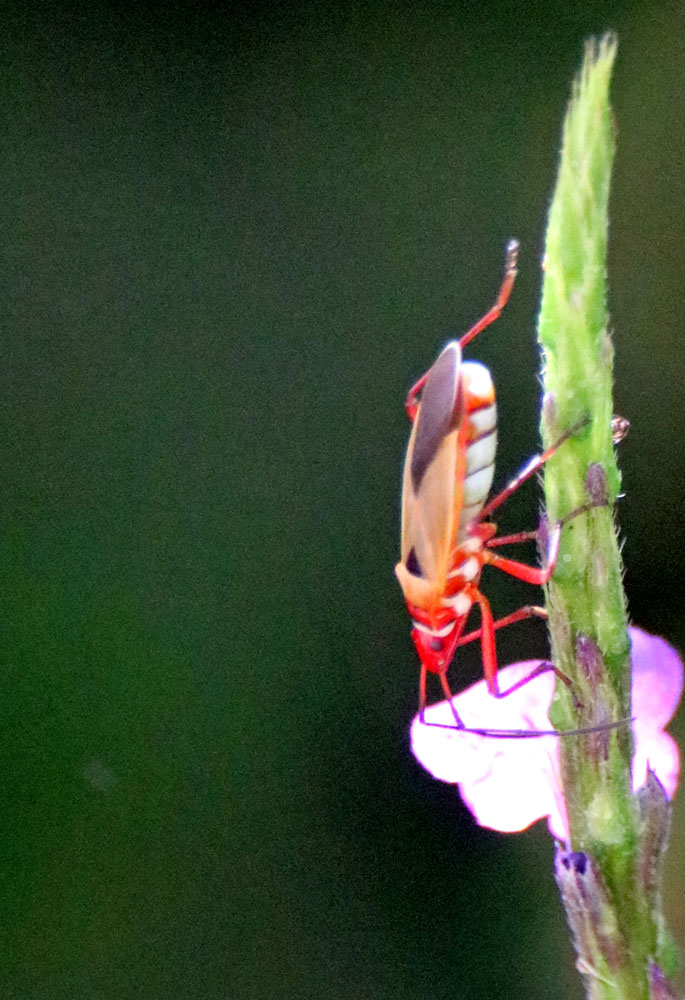
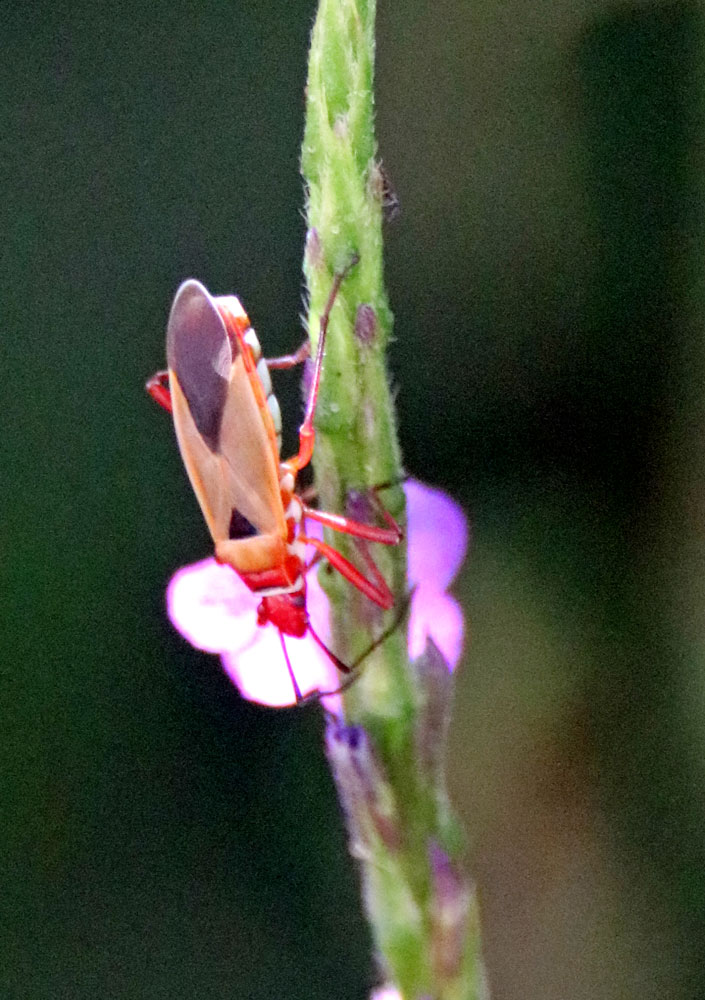
On my August 8 Calle Nueva Hike I mostly photographed butterflies, but did get two different damselflies and this little unusual insect that I’ve only been able to narrow down to its genus, Cotton Stainer Bugs – Genus Dysdercus(my gallery link for more photos). iNaturalist gave three possible species in that genus that are all three similar, but none an exact match to mine. Thus I’m leaving it with the genus ID for now and hopefully someone on iNaturalist will be able to identify it. The large number of unique and colorful insects here is amazing, as you can see in my gallery: More Insects CR (100+ Species), linked. Note that I have separate galleries for two other major categories of insects: Dragonflies & Damselflies CR and of course my largest, Butterflies & Moths CR. 🙂
Cotton Stainer Bugs – Genus Dysdercus, Calle Nueva, Atenas, Alajuela, Costa Rica
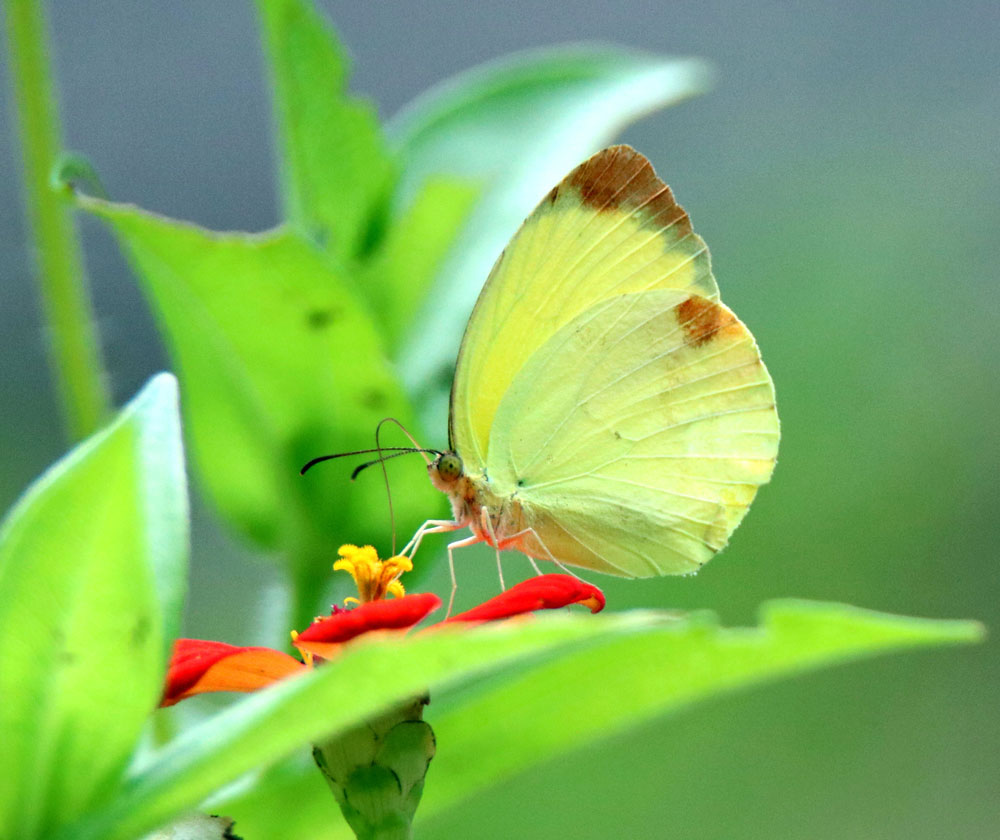
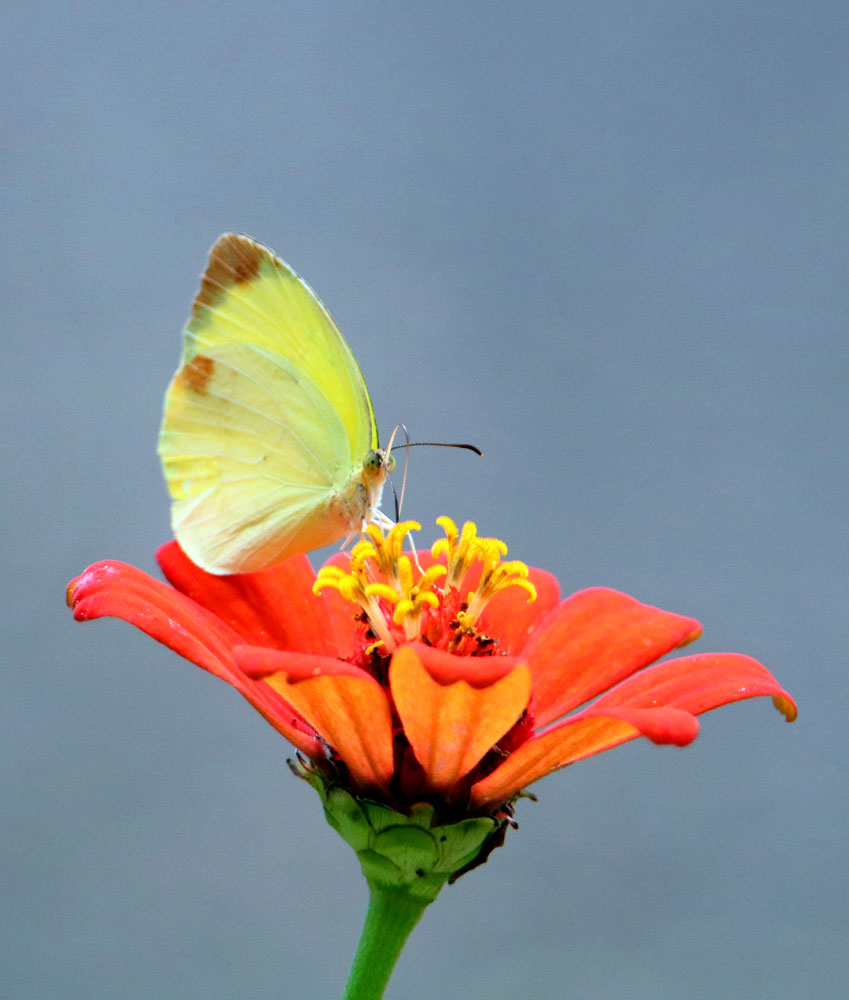
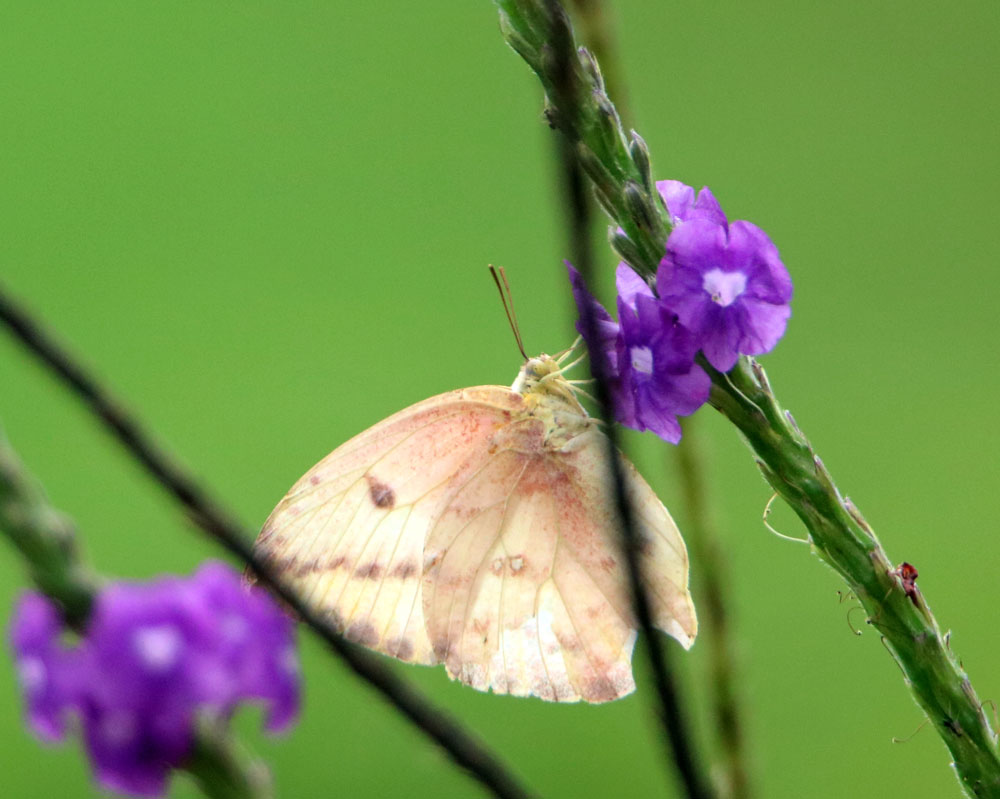
So many of the butterflies have colors included in their names and this one is not the only one that doesn’t stick to its colors. 🙂 I’ve seen the Large Orange Sulphur(my gallery link) two or three other times, including one last month that was orange or really an orange-yellow. 🙂 But you have to admit that the name sounds better than calling it a “Large Dirty White Sulphur!” 🙂
Large Orange Sulphur, Atenas, Alajuela, Costa Rica
The Milkweeds I planted finally attracted a Monarch, but only this one on one day, while the Milkweeds are being dominated by a “flight” or “kaleidoscope” of Banded Peacocks. 🙂 I made a lot of photos with 9 shown in the gallery, Monarch (linked), along with many other Monarchs from other locations in Costa Rica with I think the best being the ones made at Maquenque Lodge this past July. Just two shots from my garden in this blog post.