
There are four species of squirrels in Costa Rica but the largest population nation-wide is this Variegated Squirrel, Sciurus variegatoides(Ardilla Centroamericana en español) with the names linked to my photo gallery with shots from nation-wide. I think they are like squirrels everywhere, very hyperactive! 🙂 And though I have seen a solid black one and a mostly red one, most are variegated like this one in my garden.
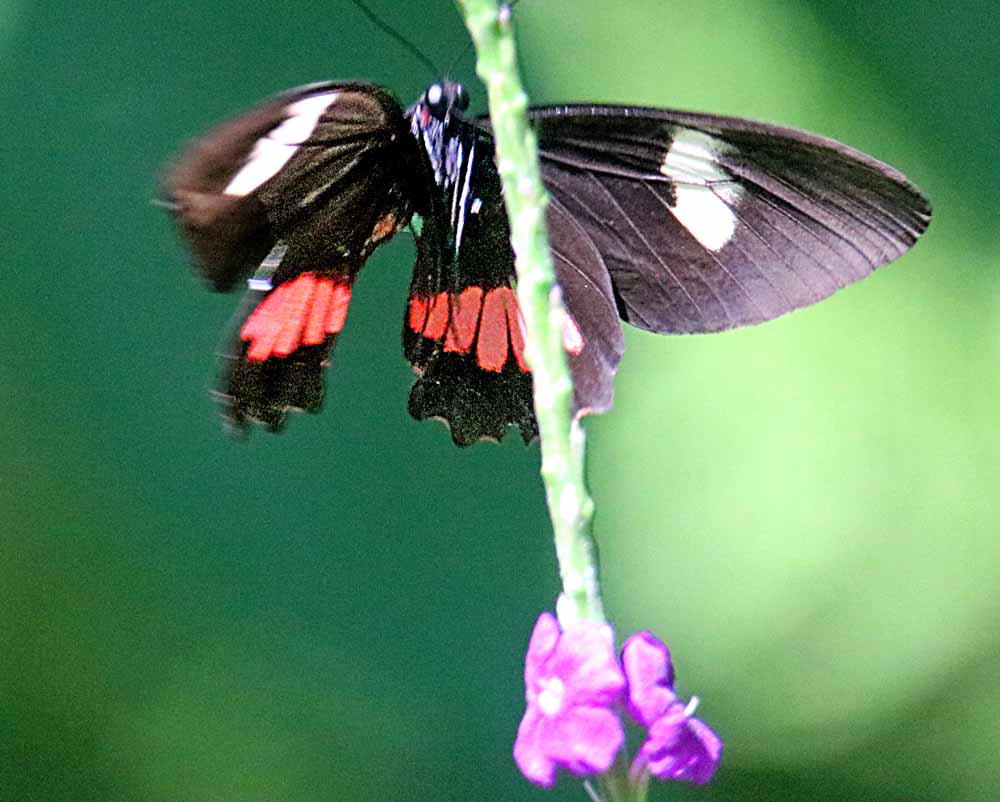
One of the late hangers-on in the late butterfly season is this Polydamas Swallowtail (my gallery link) and I’m sorry I let the camera focus on the flower more than the butterfly! 🙂
One of our two woodpeckers with the “Woody Woodpecker” hair is the Lineated Woodpecker, Dryocopus lineatus, (my gallery link) “Carpintero Lineado” en español, with the Pale-billed Woodpecker being the other big hairdo woodpecker (his whole head is red!). 🙂 This one sensed that my Cecropia Tree is dying and landed first on the trunk then went straight to a dead limb looking for insects to eat. Because of their “pecking/eating” they tend to stay longer in a tree, making them sometimes easier to photograph than other birds, though the overcast afternoon was poor light that day with a glary white sky. 🙁 Here are two shots from this past Monday. See the gallery for more from all over Costa Rica. He is found only in Central & South America, with North America’s most similar bird being the Pileated Woodpecker (linked to my gallery of one seen on Nashville’s Stones River Greenway).
Is back in Costa Rica from “up north” and no longer called just “Yellow Warbler” as in the past but has a new official name of Northern Yellow Warbler – Setophaga aestiva (linked to my gallery) and what is used by eBird and iNaturalist. Some older books still say just Yellow Warbler and the Princeton Field Guide says American Yellow Warbler. I’m not sure which names are harder to keep up with, Birds or Butterflies! 🙂 They seem to both be changing frequently. This particular bird showed up on December 1 in my Cecropia Tree. Here’s two shots of him/her . . .
The closest I’ve been able to get to an identification so far on iNaturalist is “Subfamily Coreinae Insect.” Then quickly after posting it, someone more knowledgeable narrowed it down to “Piezogaster Genus”(iNaturalist link) which is closer to a species name which hopefully someone will be able to provide there. Here’s two shots from the floor of my terrace from different angles (front & back) . . .
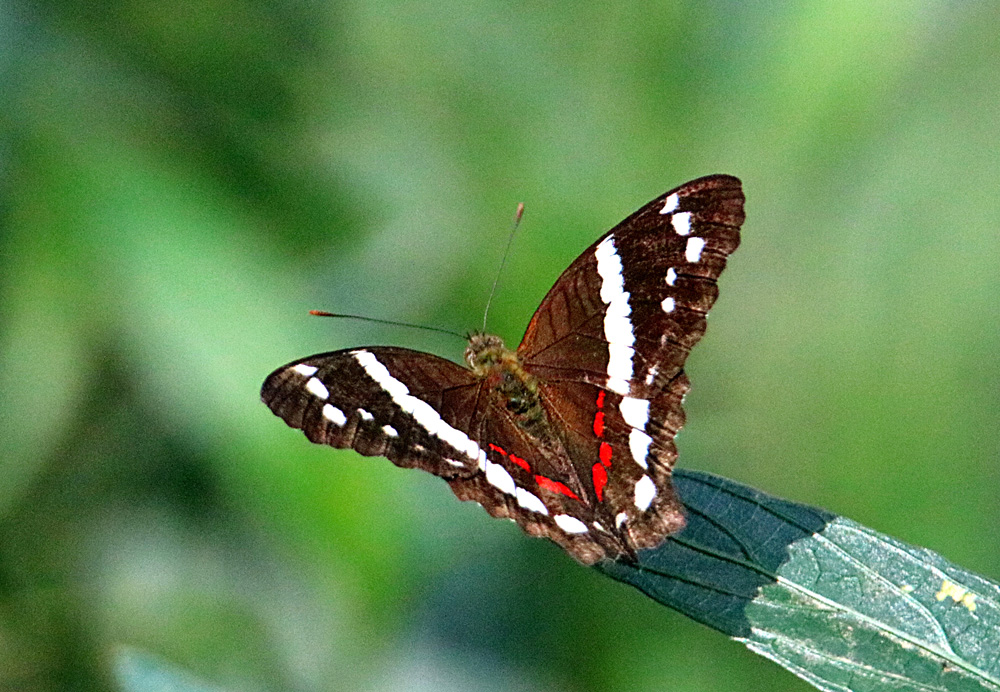
This very common butterfly is the one I keep seeing as many of the others are no longer around. There are much better photos in my gallery: Banded Peacock, Anartia fatima.
This is my first sighting of a Red Cracker, Hamadryas amphinome (linked to iNaturalist). I did post one here earlier that I called a Red Cracker, but later found out that it was actually an Orange Cracker. Still learning! 🙂
This Rufous-backed Wren (my gallery link) stopped in one of my Nance Trees, not for a berry (wrong time of year) but for an insect snack out of the little Air Plant growing on the tree. 🙂
Rufous-backed Wren stopping for a snack from the air plant, Atenas, Alajuela, Costa Rica.Rufous-backed Wren stopping for a snack from the air plant, Atenas, Alajuela, Costa Rica.
One of the most common or often seen butterflies in my garden is the Banded Peacock, Anartia fatima (my gallery link) and maybe also the most common in other places I visit in Costa Rica.