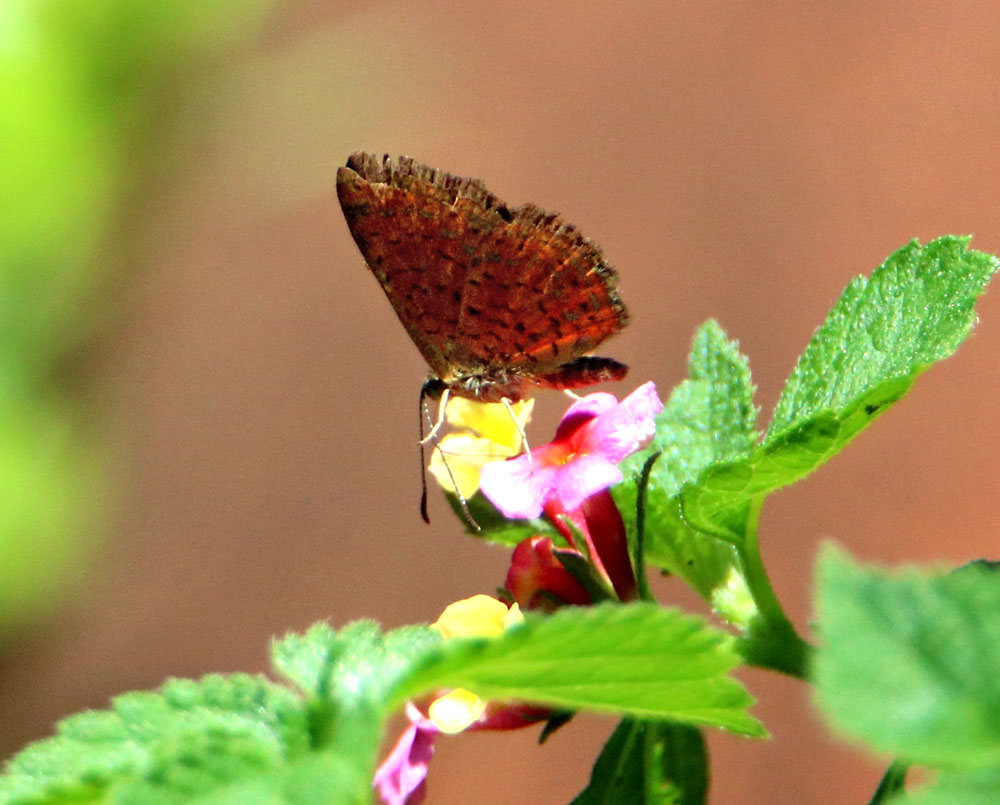
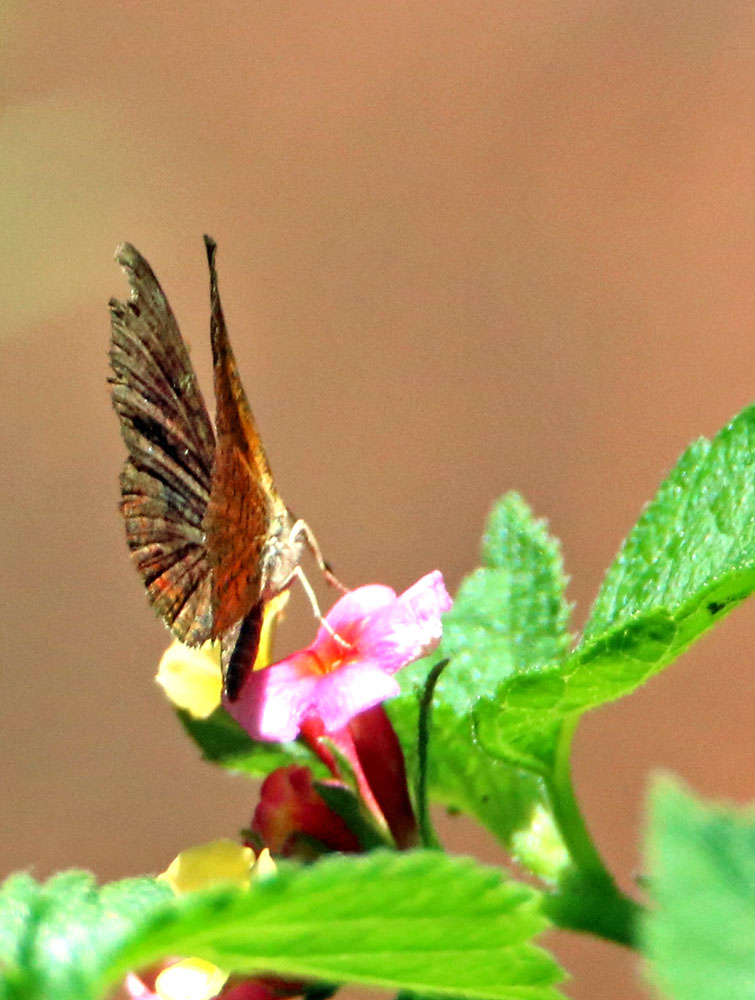
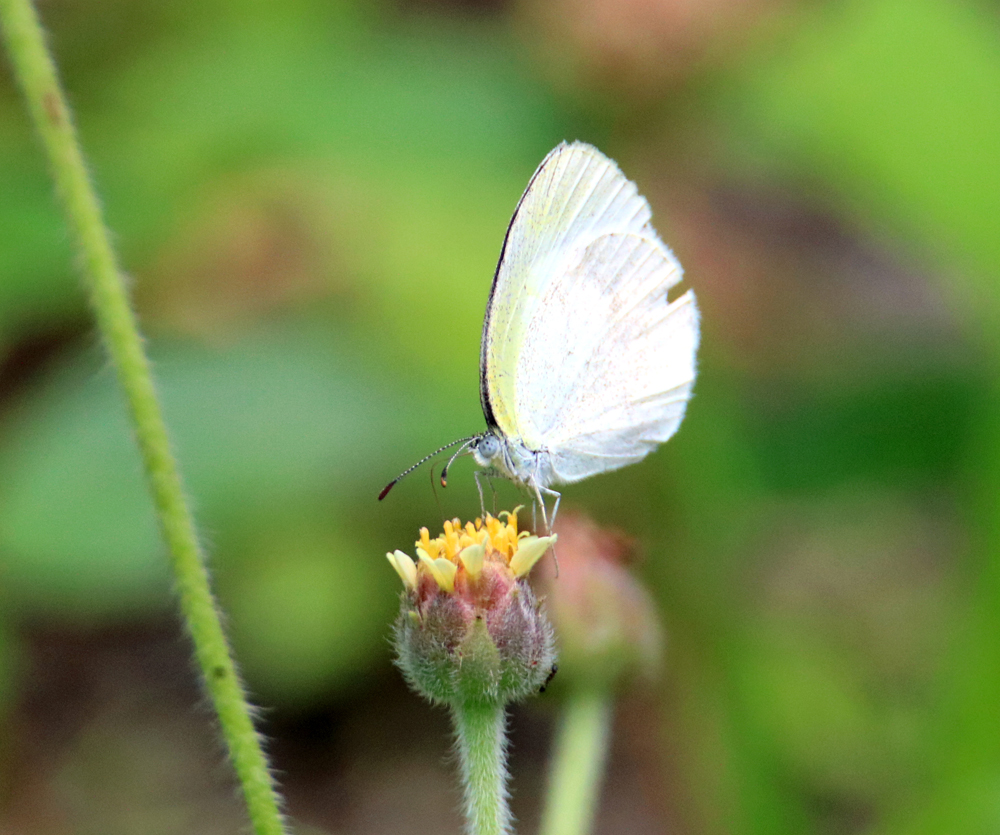
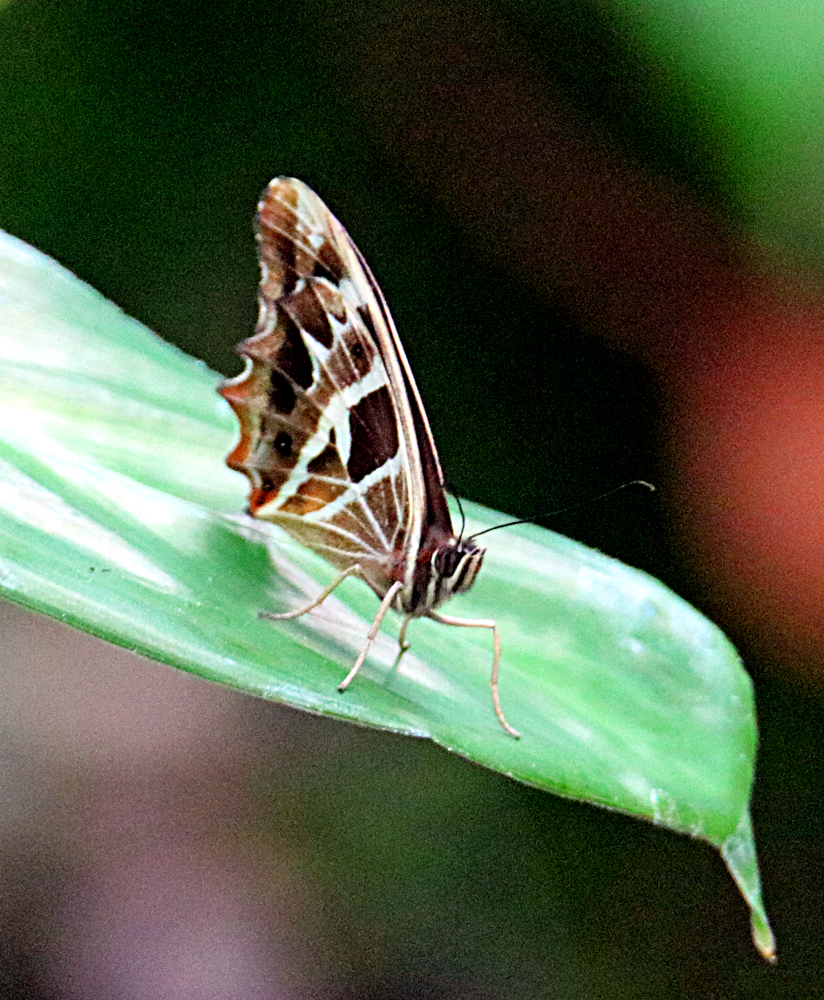
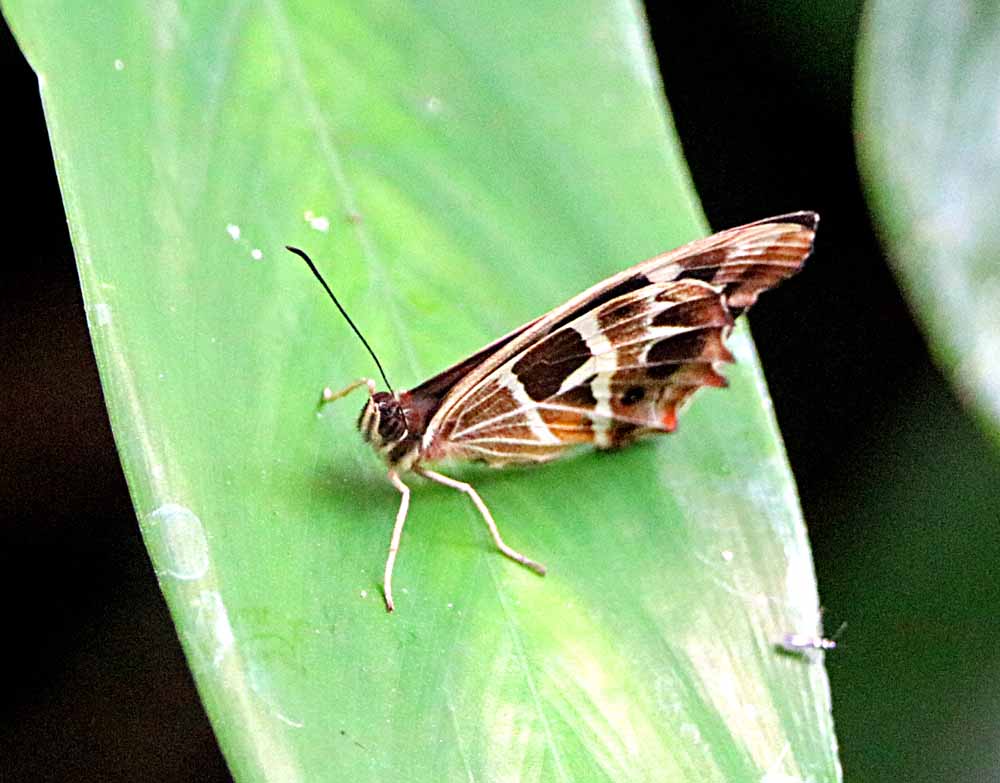
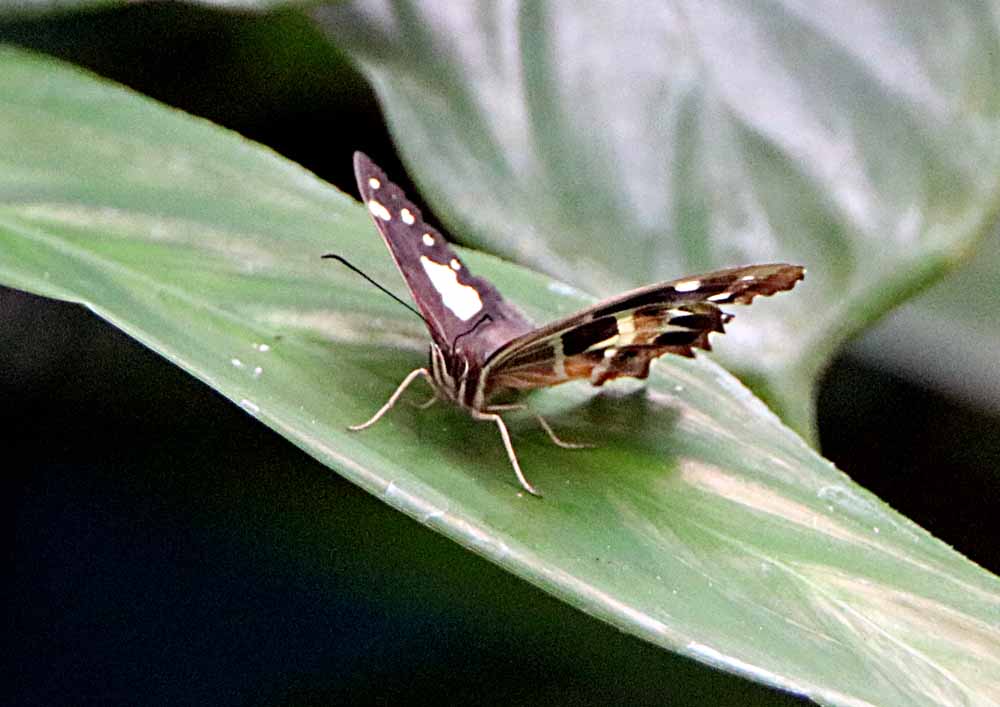
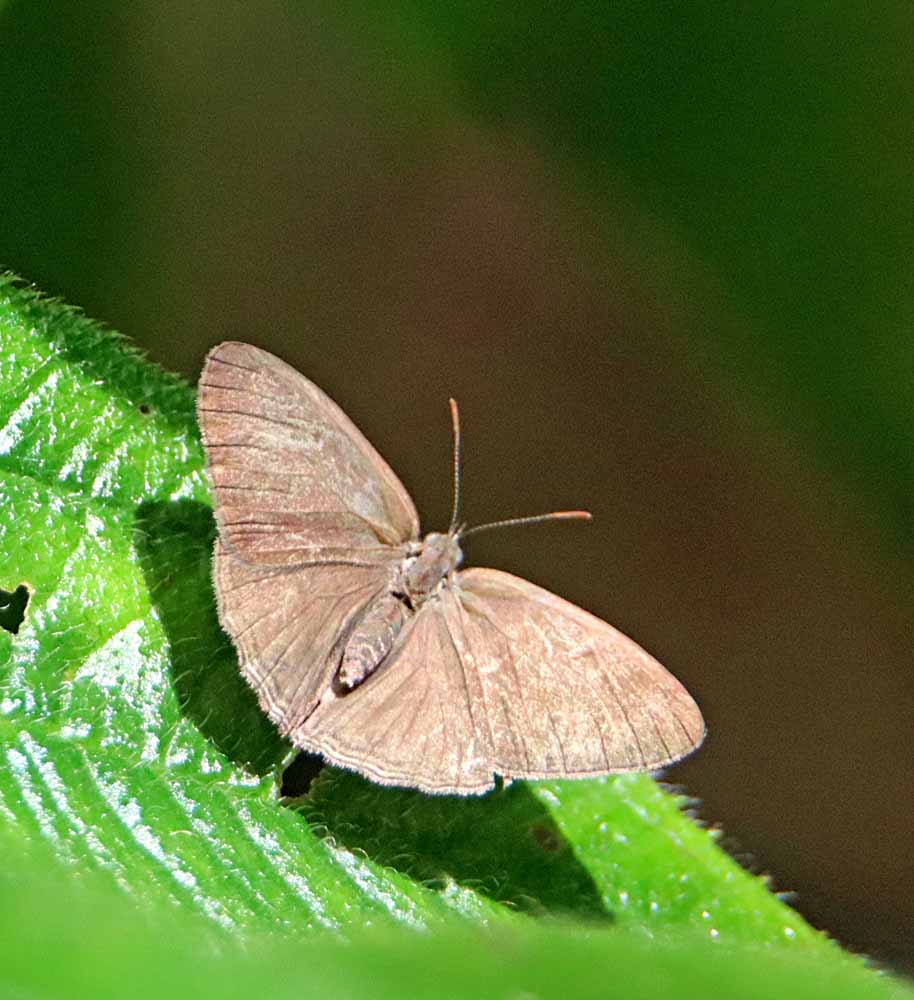
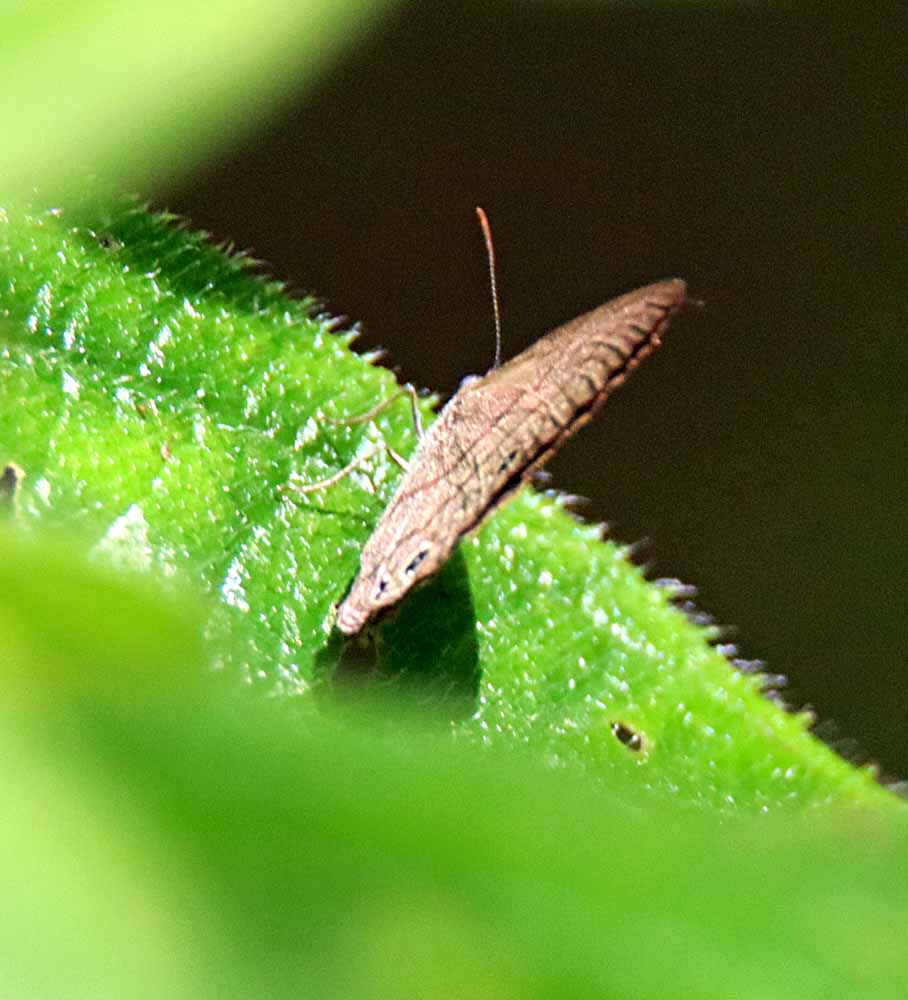
I’m beginning to place more of my unidentified butterflies into their probable genus or even a broader tribe or family, thanks to the folks at iNaturalist who encourage that and their very helpful AI helps me choose which level to put it in. This one from June at my house really fits the Calephelis Genus but I simply cannot identify the species and hopefully when I post it on both iNaturalist and BAMONA at the end of the month as my June observations, some “identifier” or butterfly specialist will have an identity. 🙂 But until then, this observation will stay with several other similar ones in my gallery Calephelis Genus. (linked)
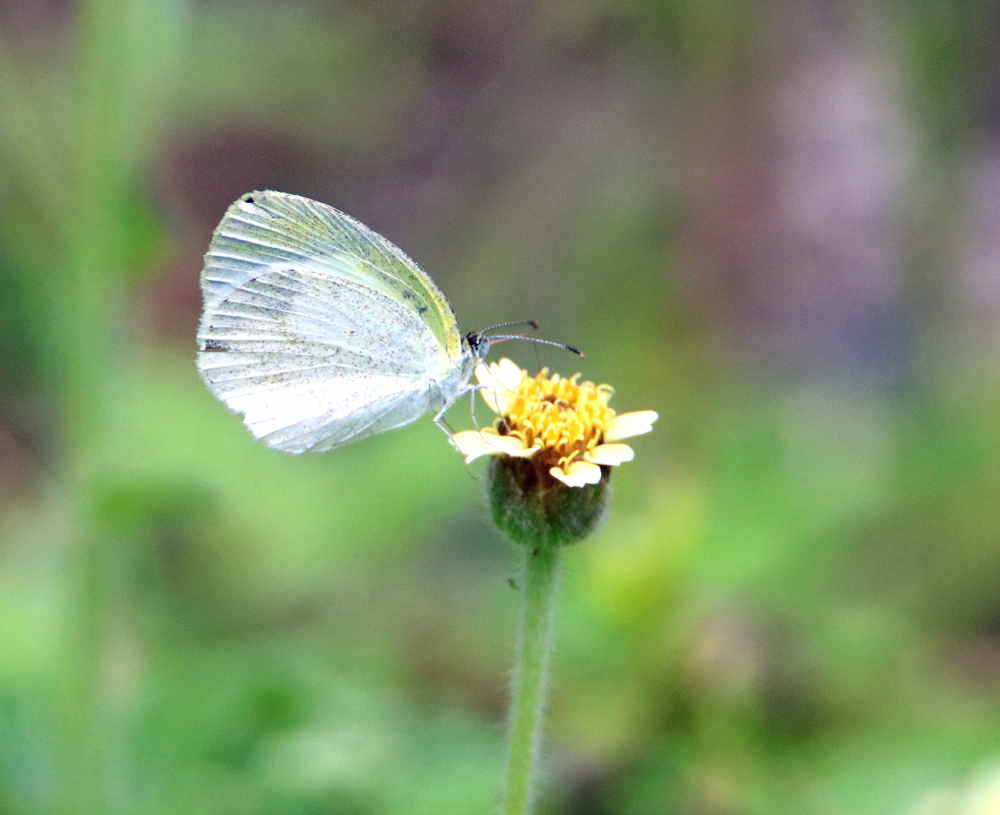
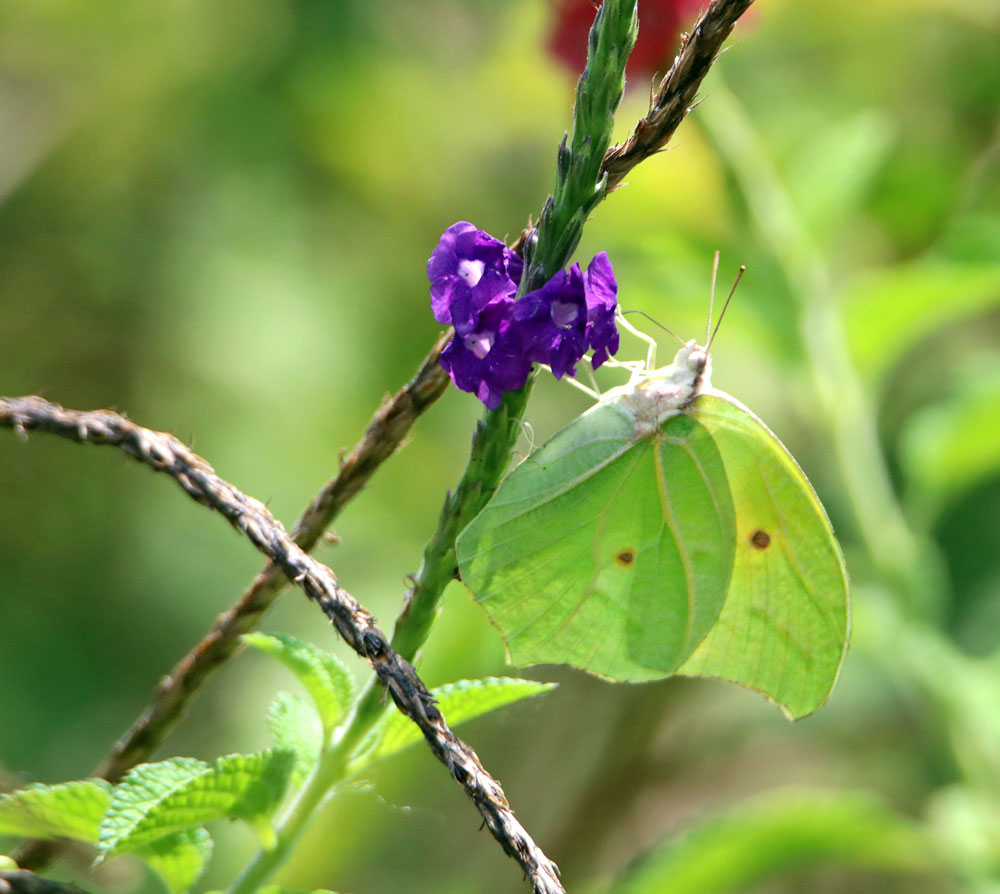
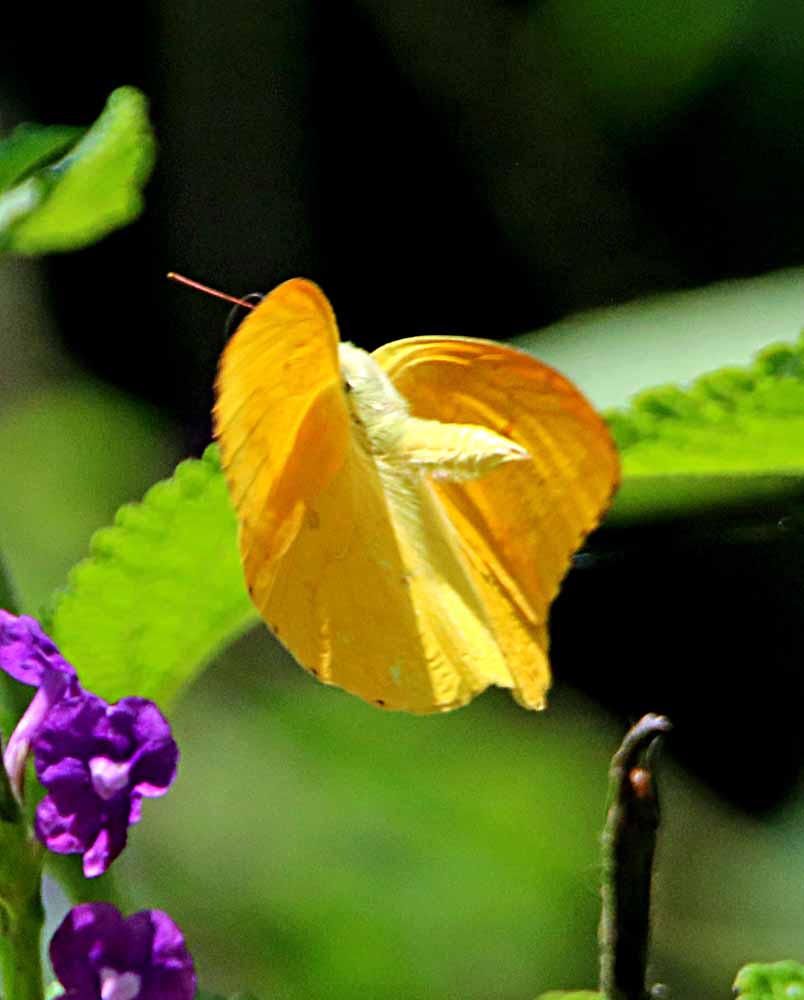
The wind is slowing down a little and that helps to see more birds and butterflies like this White Angled-Sulphur (my gallery link) photographed day-before-yesterday in my garden. This is a typical folded wings sideview showing a little greenish hue, while the top view is bright white with bright yellow patches under the two dark spots. See that in my above linked gallery, which I was unable to capture this time.
White Angled-Sulphur, Atenas, Alajuela, Costa Rica
“The Best Weather in the World”
or “El Mejor Clima del Mundo,” is the slogan of the town of Atenas, where the temperature stays in the Fahrenheit 70’s or Centigrade 20’s year around! It is usually windy just January to March, blowing in both regular dust and sometimes volcano ashes, which are black, making them obvious. Dry season is December to April or May and Rainy Season May to November, with April and November called “shoulder months,” meaning that it could be either dry or rainy and this April, also windy, which is not normal.
When I walked out of my bank across the street from Central Park on Tuesday, there were no other people by the city sign (unusual), so I did the touristy thing and made a selfie in front of the sign, which I haven’t done since it was first installed. The ATENAS letters have colorful drawings of places and activities in Atenas, while carved in stone beneath the name is the weather slogan: EL MEJOR CLIMA DEL MUNDO, which is also on the back of all Atenas buses.
Charlie Doggett, Central Park, Atenas, Alajuela, Costa Rica
We were suppose to have a big rain last night and I hope it will be the early beginning of the rainy season, which is my favorite time of year here with most days having only a couple of hours of rain in the afternoon or evening, and everything is greener and more beautiful! Plus that is when I see & photograph more wildlife including butterflies! 🙂
¡Pura Vida!
Amateur video in español . . .
Amateurish, but it does show a lot of Atenas including the county villages . . .
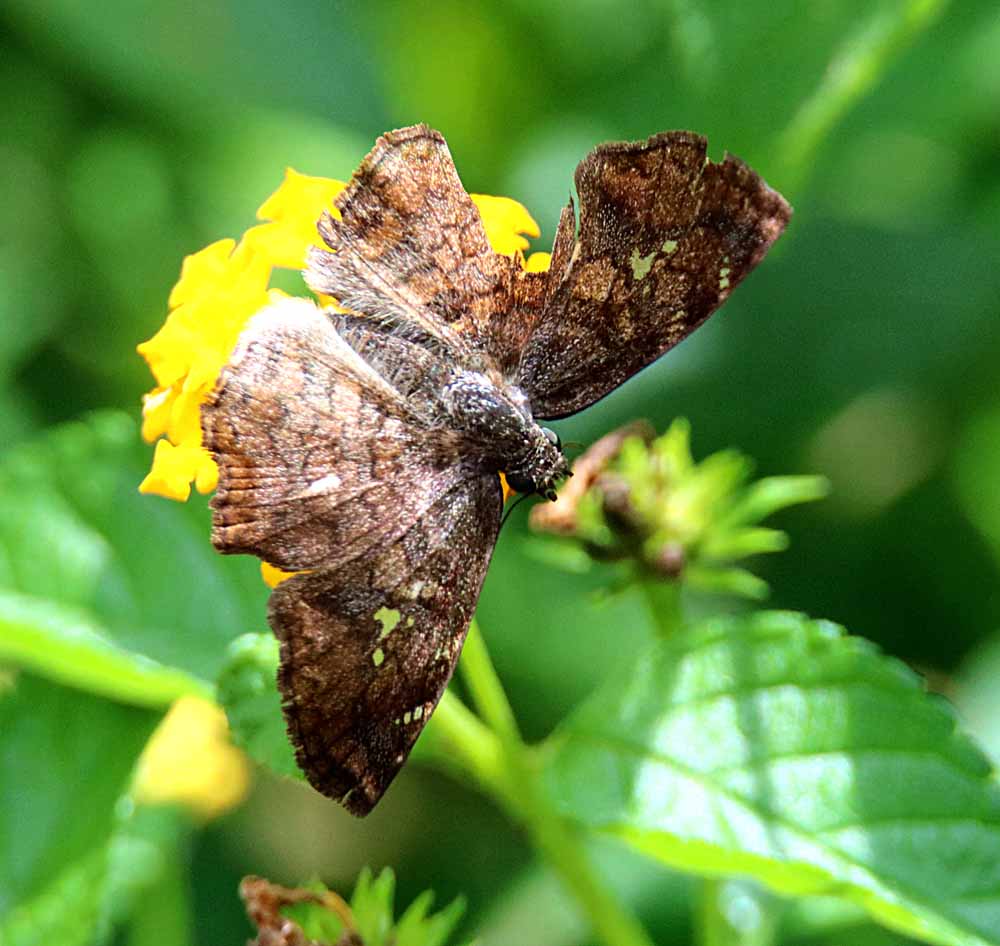
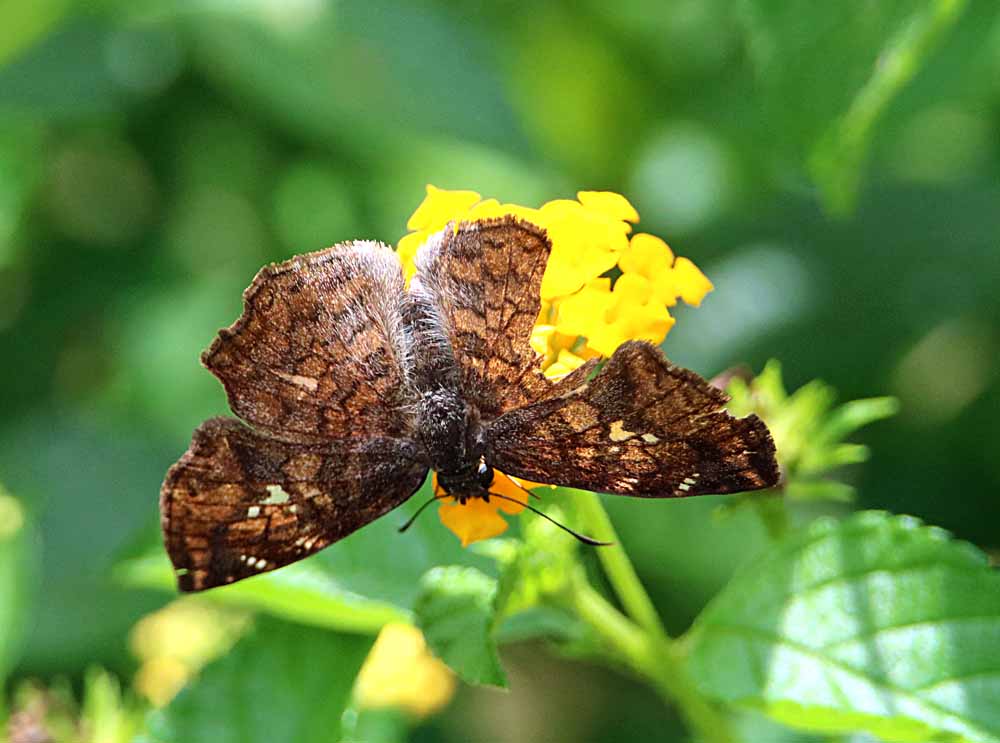
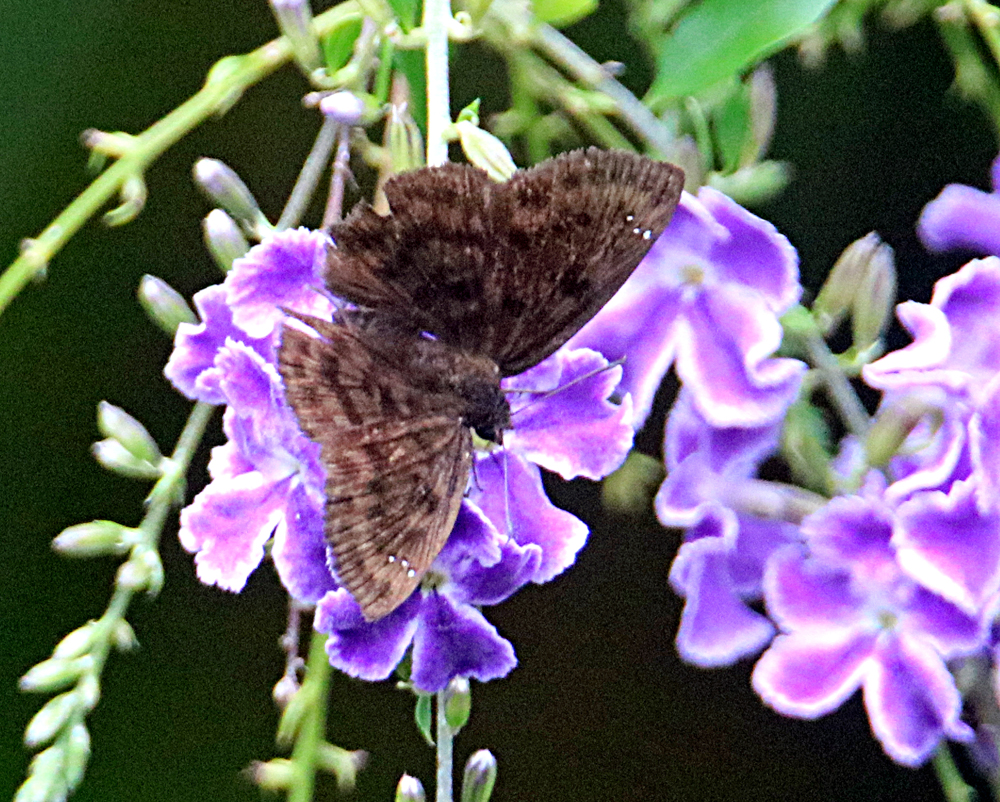
Seen in my garden before, another big brown, fuzzy Skipper that at times seem like the majority of the butterflies! 🙂 I’ve had this one in my garden one other time, back in 2023 as shown in my gallery: Wind’s Skipper, Windia windi. (Linked to the gallery.)
I think it is most likely the Telemiades nicomedes, but not sure, so giving it the genus name. iNaturalist uses the genus name a lot as you can see on this Genus Telemiades page of iNaturalist Costa Rica.
Telemiades Genus of Skipper, Atenas, Alajuela, Costa Rica
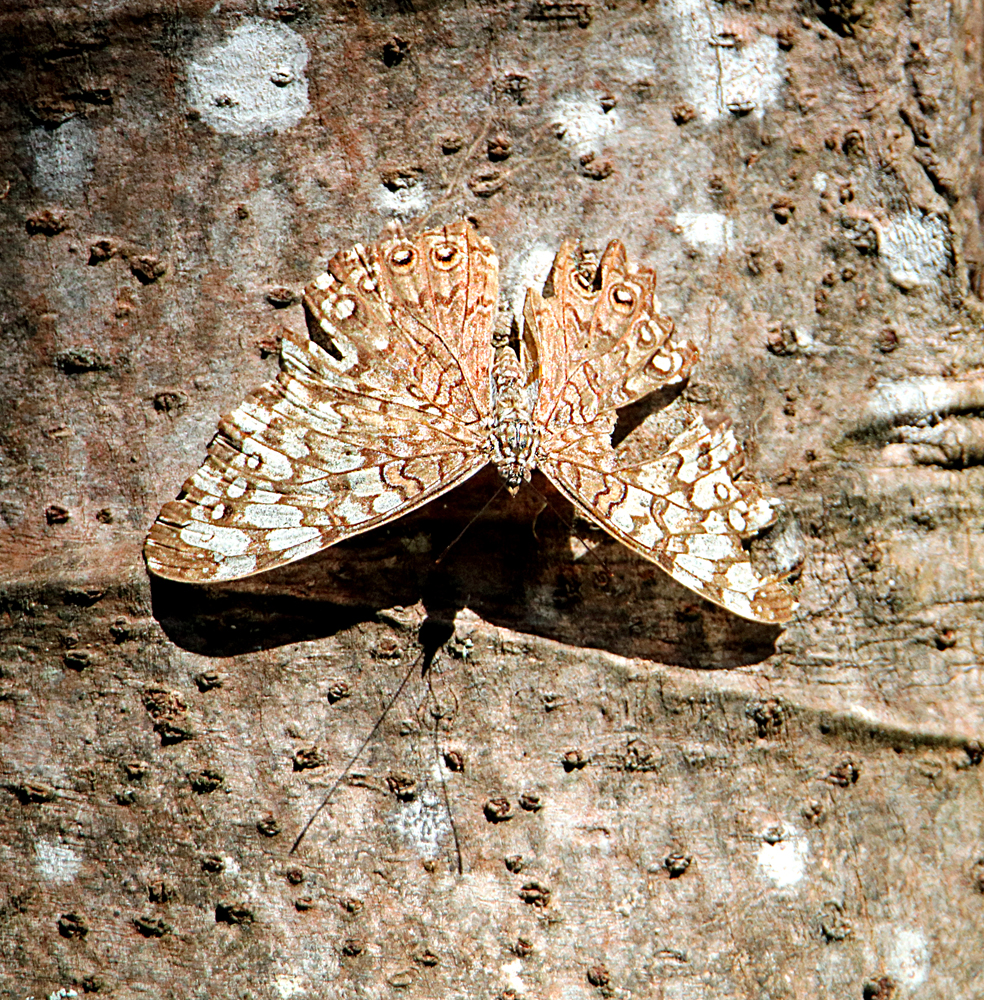
This Yellow-patched Satyr or Starred Oxeo, Oxeoschistus tauropolis (my gallery link) is not one often reported on the scientific websites, and though I’ve seen it three times now, it was always in the same place! 🙂 This one on Christmas Day 2024, again at Xandari Resort which has always been one of my better butterfly locations.
Yellow-patched Satyr or Starred Oxeo, Oxeoschistus tauropolis, Xandari Resort, Tacacori, Alajuela, Costa RicaYellow-patched Satyr or Starred Oxeo, Oxeoschistus tauropolis, Xandari Resort, Tacacori, Alajuela, Costa RicaYellow-patched Satyr or Starred Oxeo, Oxeoschistus tauropolis, Xandari Resort, Tacacori, Alajuela, Costa Rica
And how can a butterfly named “Apricot” not be cool? 🙂 This Apricot Sulphur, Phoebis argante (my gallery link) I saw just a week ago in my garden for my fourth sighting! One other time in my garden and once each at Xandari and Banana Azul, my two best butterfly hotels here! Check out the different looks in my gallery linked above or study them online. Here’s two shots with more from that sighting in the above gallery.
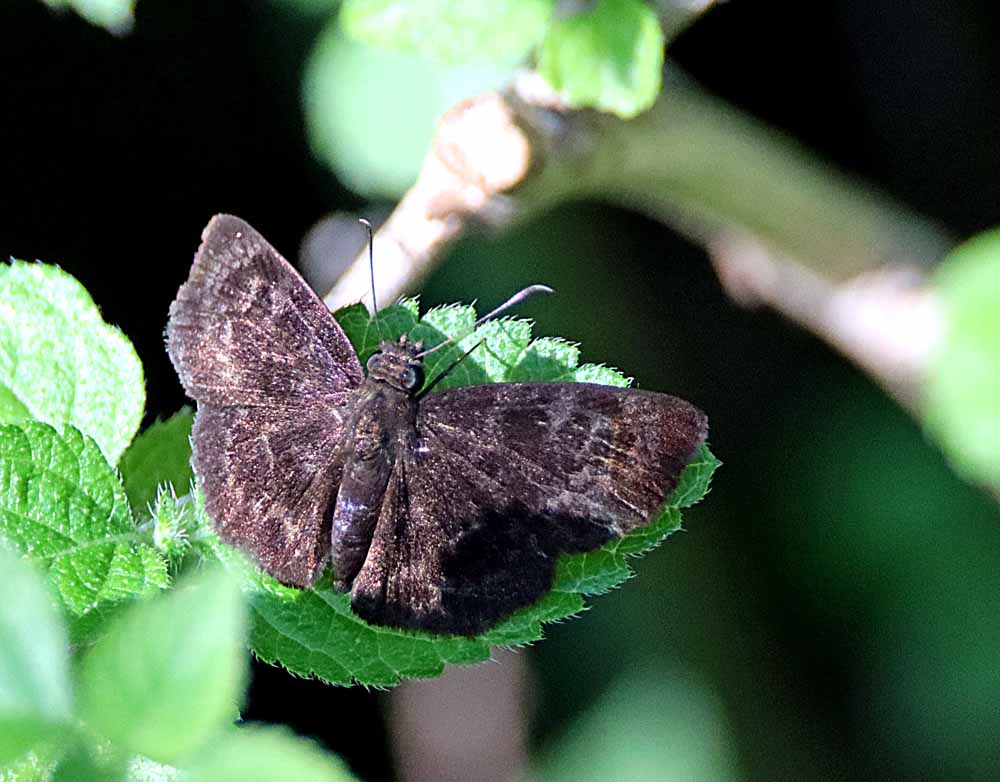
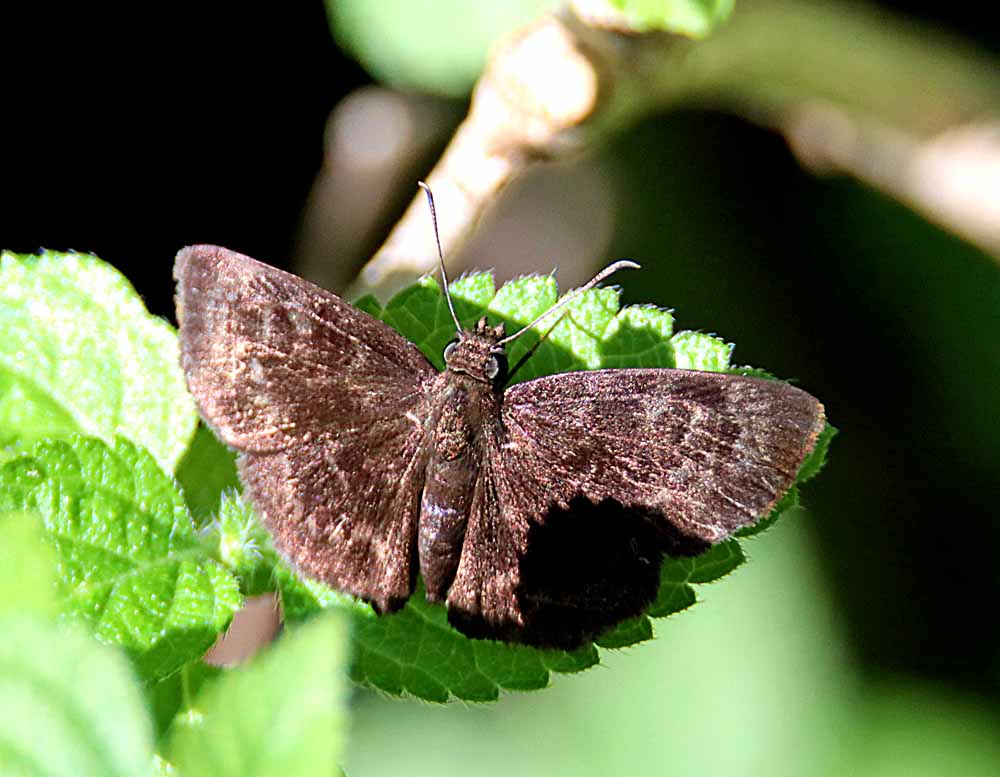
Saltbush Sootywing is the common name and the scientific name is Hesperopsis alpheus. This is a new species for me. And my ID is based on the Glassberg book where it is an exact match, but my photos don’t match the ones on butterfliesandmoths.org for this species, so I will probably be flagged and if so, I hope whomever can give a good identification for this butterfly, IF this ID is not correct. Note that the two photos are of the same insect on the same leaf within seconds apart, but the changing light or capture of the camera has them as two different colors. 🙂
Saltbush Sootywing, Atenas, Costa RicaSaltbush Sootywing, Atenas, Costa Rica
This Renata Satyr, Yphthimoides renata, was spotted on the campus of the La Gamba Field Station down the road from Esquinas Rainforest Lodge. It is a rainforest research station for the University of Vienna, Austria and that is why German is spoken in that area as much or more than English along with the Spanish of course! And I refused to put it in the headline, but this is another “first time seen” butterfly for me! 🙂 And I will do a post on the research station later. And for the butterfly enthusiasts, yes, you need the side view of Satyrs for good ID and by blowing up my one angled side shot I was able to confirm the proper eye spots and lines to assure this identity. 🙂 Another Central American butterfly!
Renata Satyr, La Gamba Field Station, Piedras Blancas NP, Golfito, Puntarenas, Costa RicaRenata Satyr, La Gamba Field Station, Piedras Blancas NP, Golfito, Puntarenas, Costa Rica